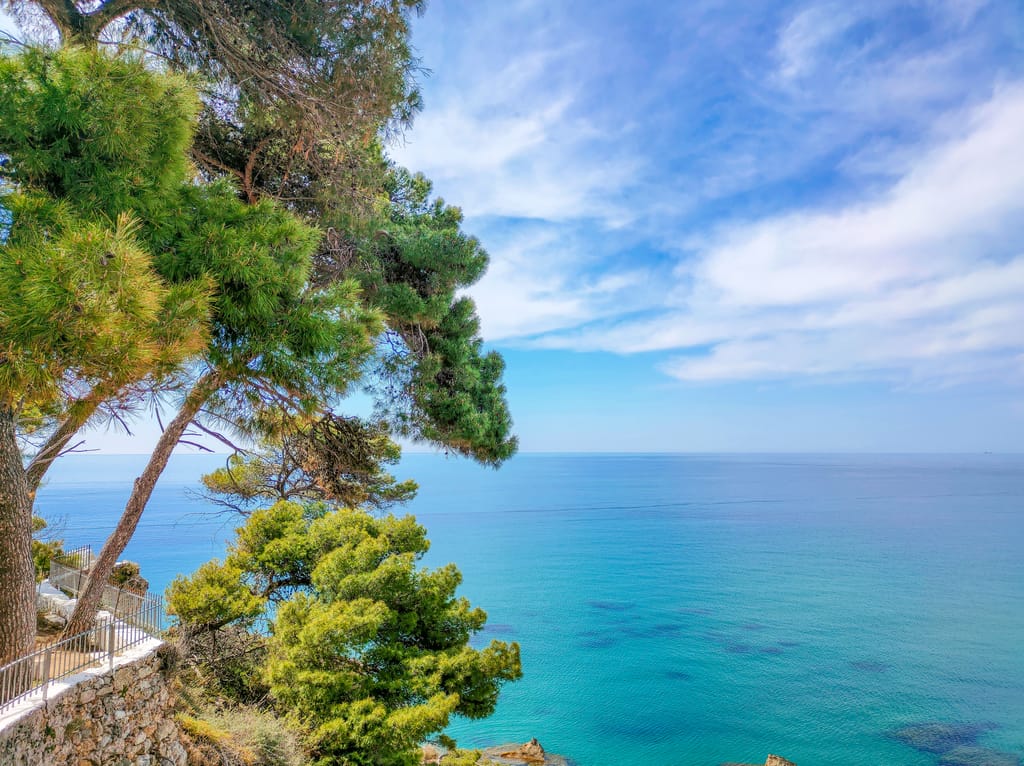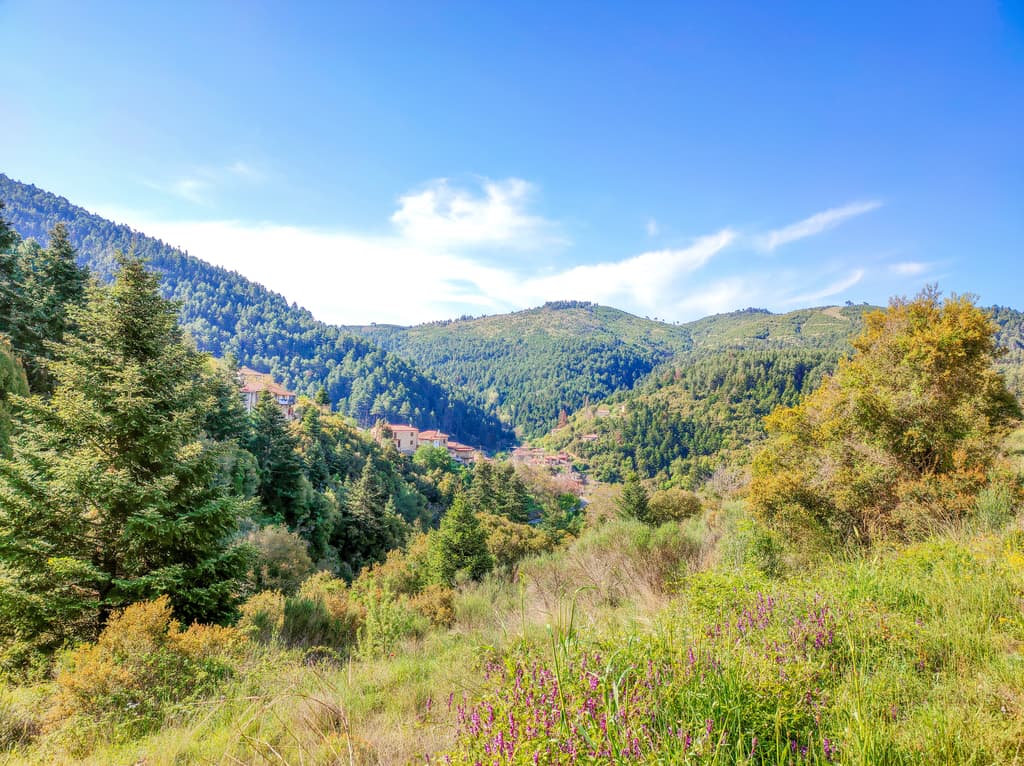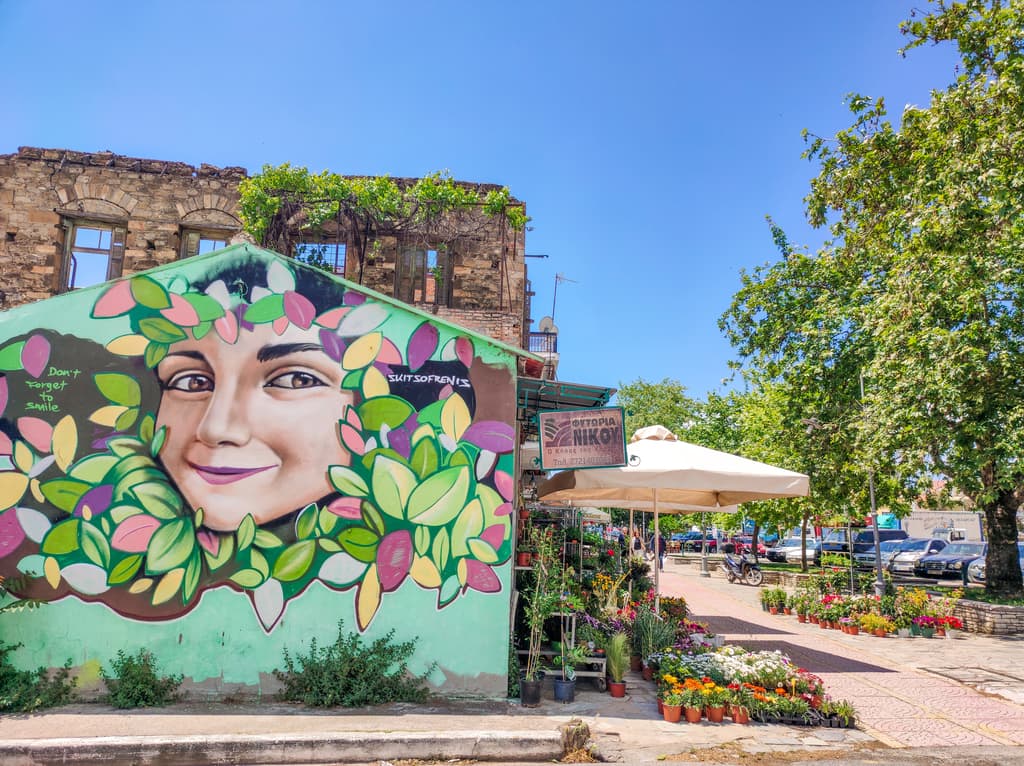

Imagine stepping into a living postcard – Koroni is a storybook town where ancient legends meet the turquoise waters of the Mediterranean. The crown jewel, a Venetian castle perched dramatically above, tells stories of conquerors and seafarers with the waves of the sea crashing below. Whether you’re strolling its golden beaches, savoring a meal at a cozy taverna overlooking the bay, or wondering the quaint streets, Koroni isn’t just a destination, it’s an escape into a world where time slows down and magic feels real. At least Koroni felt that special to me.
Located on the eastern coast of the first leg of Peloponnese peninsula, Koroni is a wonderful day trip from Kalamata. Read further to find out how to spend the perfect day in Koroni: what to do and what to see.
DISCLOSURE: This post contains affiliate links. If you make a purchase via one of those links, I will earn a commission at no extra cost for you.
I have visited Koroni on a trip during the TBEX Conference in Kalamata, where the transportation, the meal, and the guided walking tour were organized and provided by Mythical Peloponnese, the tourism board for the Peloponnese region in Greece. All opinions in this post, as always, are mine.
How to get to Koroni?
Koroni is an easy day trip from Kalamata and there are regular buses operated by KTEL. The trip takes about 1,5 hrs. You can spend the whole day in Koroni and go back to Kalamata in the evening, adding even a half day at the beach, if you are visiting in the summer. In 2025 a bus ticket from Kalamata to Koroni costs 5,50 EUR.
If you are coming from Athens to Koroni, you can change buses at Isthmos/Corinth. The trip takes about 5 hrs, so Koroni is not recommended for a day trip.
Another option is of course to rent a car and drive to Koroni. Koroni could be a great stop on your road trip through Peloponnese/Greece.
Brief History of Koroni
Once called “The Eyes of Venice”, Koroni may have lost its significance as a trading harbour and a military fortress over the centuries, but never lost its pure charm. The town emerged on the ruins of the Ancient Asini, when the population of Ancient Koroni fled southwards in 7-8 century BC following Slavic and Arab raids.
Fun fact: As with most places in Greece, there is also an Ancient version of Koroni (ancient Koroni or Corone/Korone), which as usual is located somewhere else, and does not coincide with the modern version of the town. Ancient Koroni was located further north on the coast near the modern town of Petalidi.
The Venetians took over the town in the early 12th century, built there a castle, and for 3 centuries long Coron, the way they called it then, flourished as an important stop on the way to the Holy Land. Then the Ottomans came in the 16th century and stayed there until 1825 when Greece gained its independence, although the Venetians managed to take over Koroni at the end of the 17th century, but the Venetian rule lasted only for 30 years this time.
What to see and do in Koroni?
One day is enough to have a glimpse of Koroni and see all landmarks. If you need to go deeper than just sightseeing, I would recommend staying longer. Here on the map you can find all places that you can visit in one day in Koroni:
The Venetian Castle
Built on the ruins of the ancient acropolis Asini, the fortress was expanded by the Byzantines in the 6th or 7th century AD and flourished under Venetian control in the 13th century.
The fortress has witnessed numerous occupations and battles, including a significant siege by Ottoman troops in 1500 and capture by the Habsburg emperor Charles V in 1532. In 1685 Koroni was captured back by the Venetians and remained part of the Stato da Màr (the overseas territories of Republic of Venice, or La Serenissima) until 1715.
Today, the castle remains a historical landmark, and quite interesting is the fact, that there are still people living within its walls and there is also a nunnery.
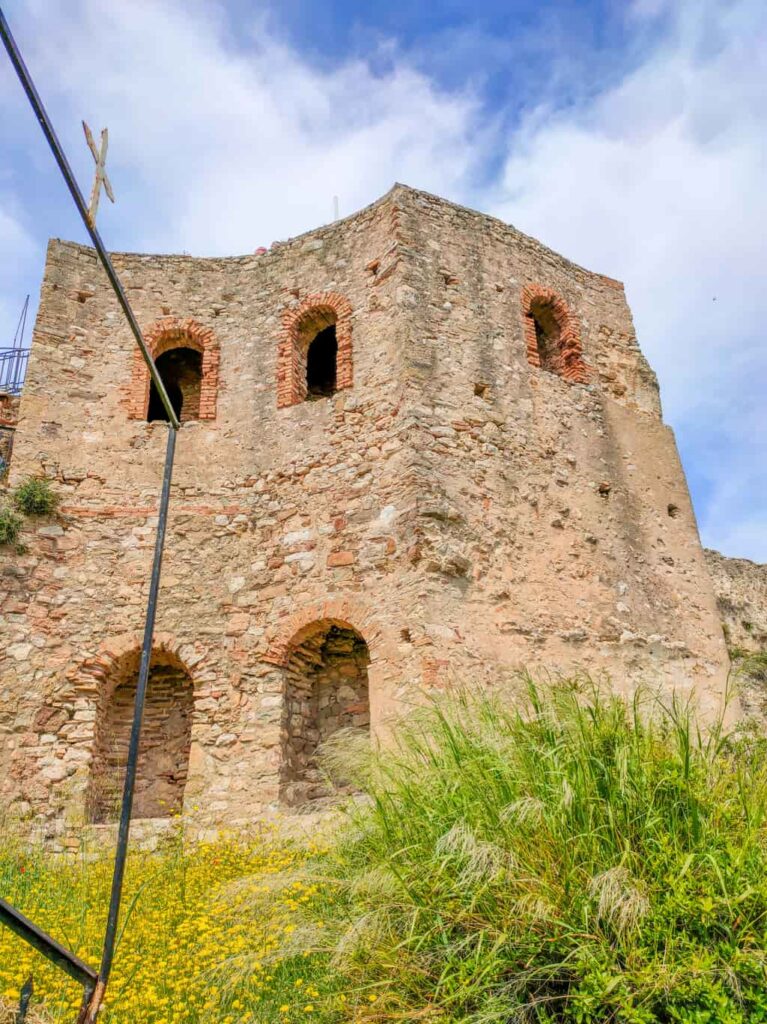
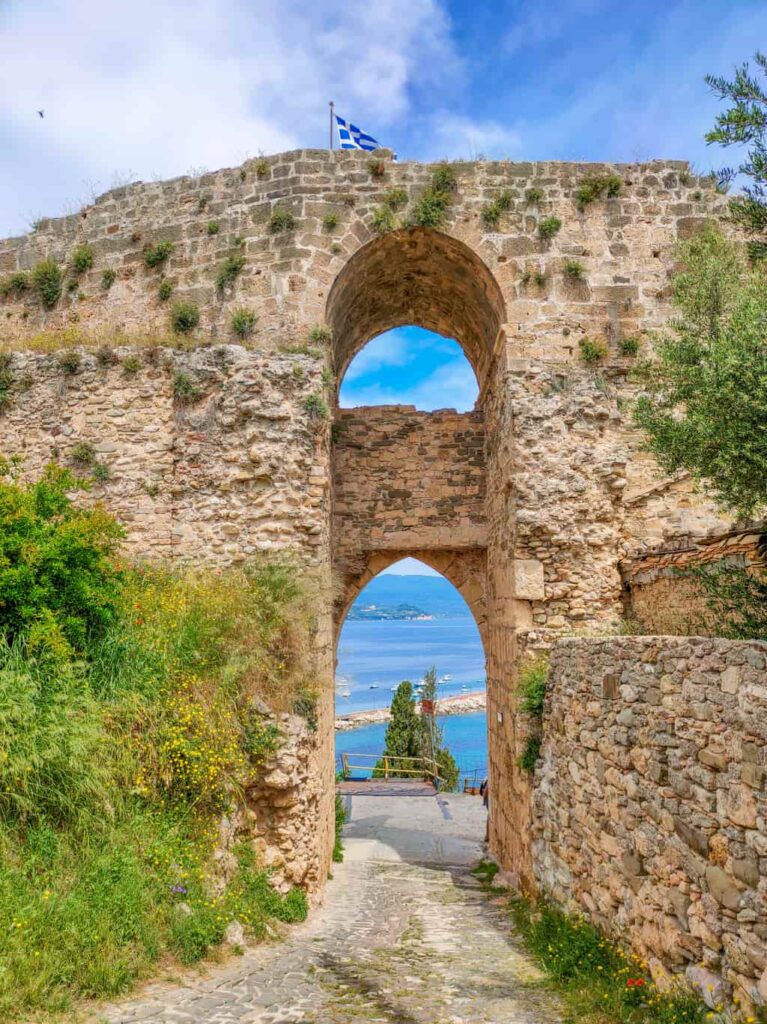
The views from the castle of the Messenian Gulf and the surrounding area are simply amazing. You can also climb to the top of the octagonal tower that was built by the Ottomans on the highest point of the hill. Another very well preserved part of the fortress is the main gate from the village.
The Church of Hagia Sophia
There are a couple of churches and a monastery on the grounds of the castle and adjacent to it, the most interesting of which is the three-aisled Byzantine basilica dedicated to Hagia Sophia, that’s in ruin now, with only the northern aisle rebuilt in the 12th century as a smaller church.
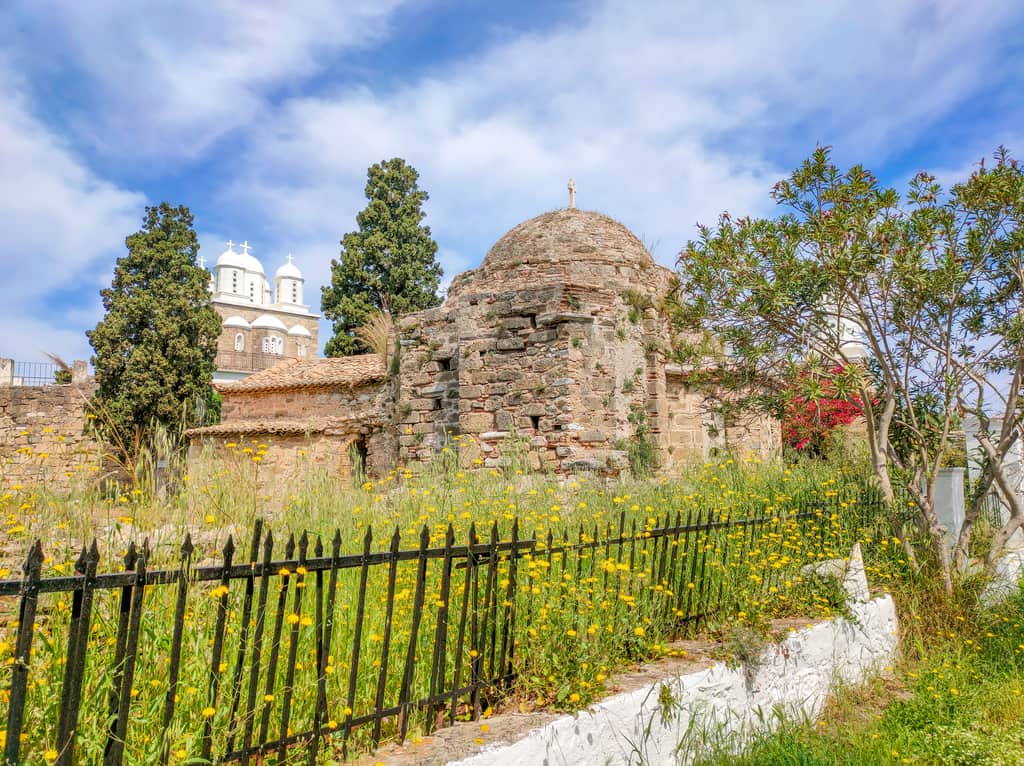
Presumably, it was built on the ruins of an ancient Temple of Apollo. However, no excavations have been carried yet to prove this theory. After the Franks occupied Koroni in the early 13 century they converted the basilica into a Latin cathedral.
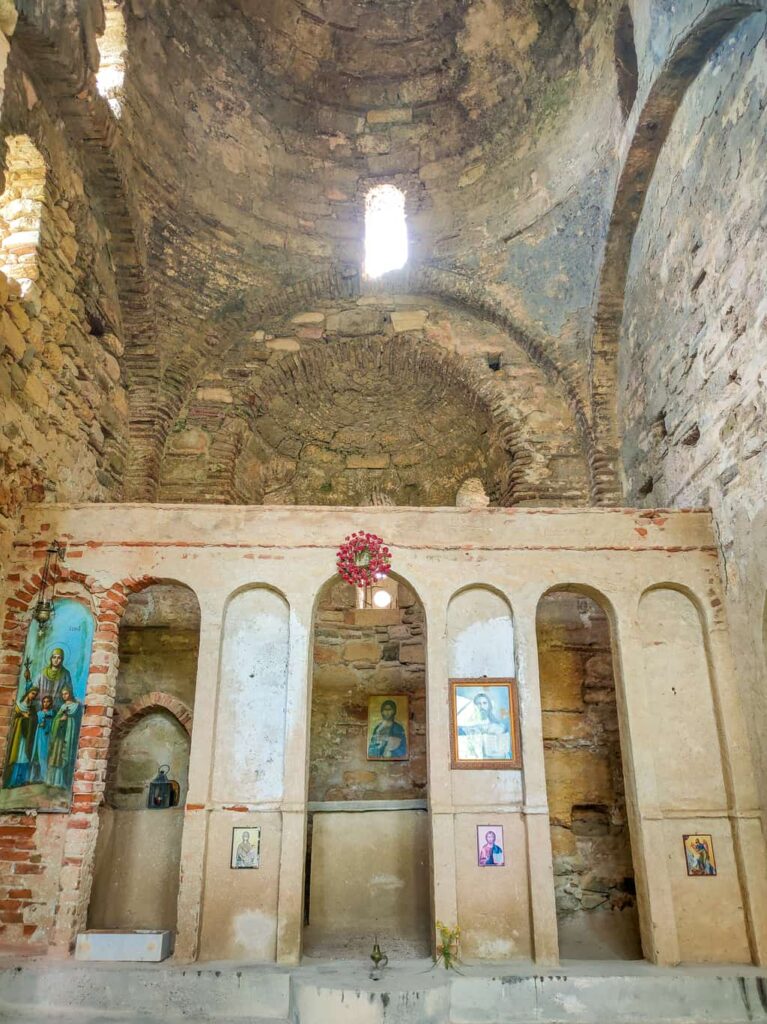
The origins of the name of the church are also unclear. Whether it is dedicated to the Christian martyr Saint Sophia or to the Holy Wisdom, is still questionable. In1927 there was discovered an old icon depicting the martyr, which kind of turns the scale in favor of the Saint.
The Old-Calendar Nunnery Timios Prodromos
To reach the octagonal tower on top of the fortress hill, you need to go through the courtyard of the Timios Prodromos Nunnery. Walking the peaceful alleys, lined up with an explosion of colorful plants and buzzing bees and insects, transports you in another world, calming and surreal.
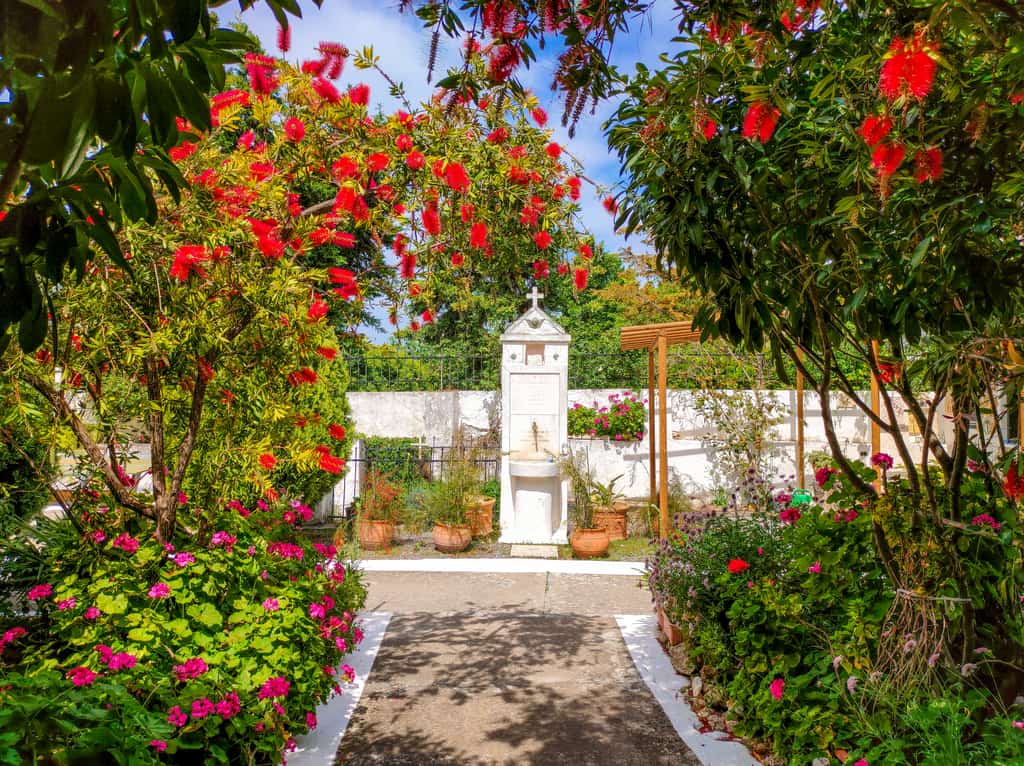
The monastery was founded in 1918 by the ascetic monk Theodolous. It belongs to the Old Calendar, which means that it follows the Julian calendar.
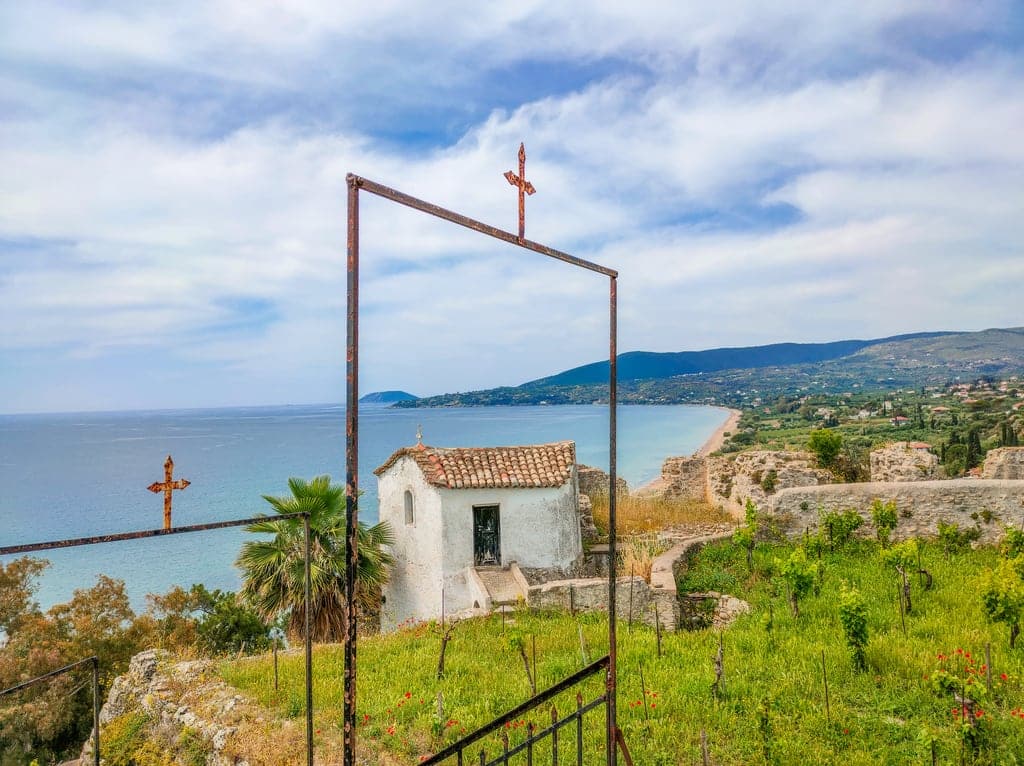
The Church of Panagia Eleistria
Another lovely church on the territory of the castle is the Church of Panagia Eleistria. The church is located at the southwestern edge of the fortress and is surrounded by a beautiful garden from which there is magnificent view over the Aegean Sea and Zaga Beach.
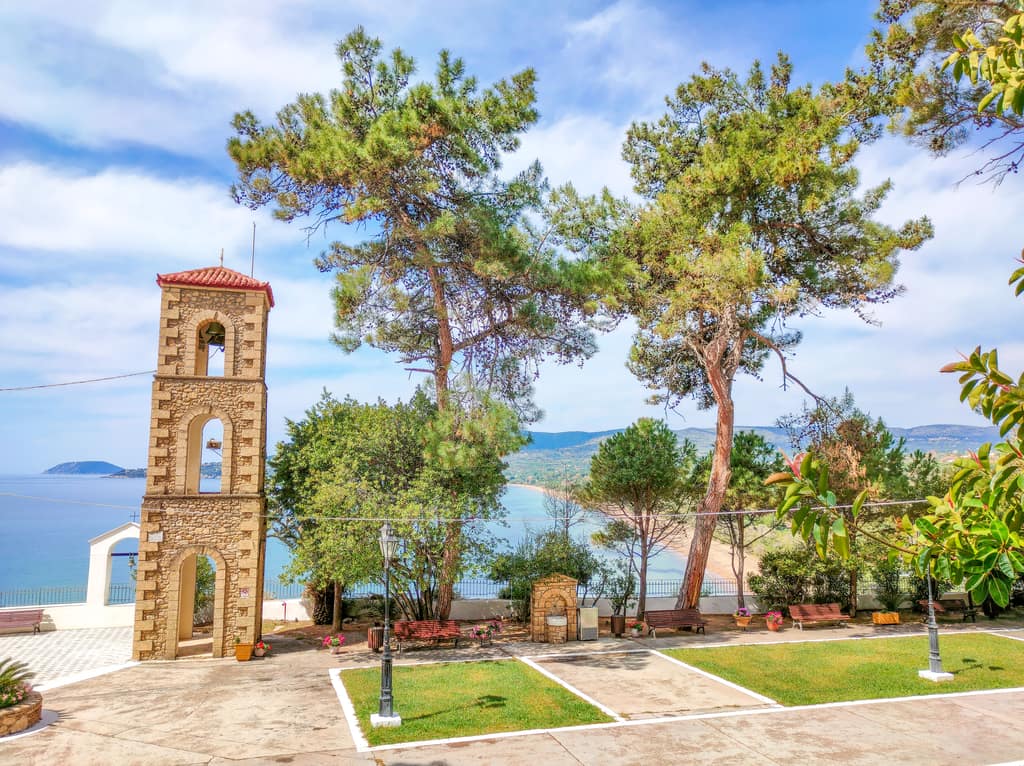
In 1897 a sacred icon of Panagia Eleistria was miraculously discovered, following 15 years of visions experienced by a devout local woman, Maria Stathakis. The Theotokos (Virgin Mary) appeared to her repeatedly, revealing the location of three sacred icons: Christ Crucified, the Theotokos, and Luke the Evangelist, hidden within a rock crevice.
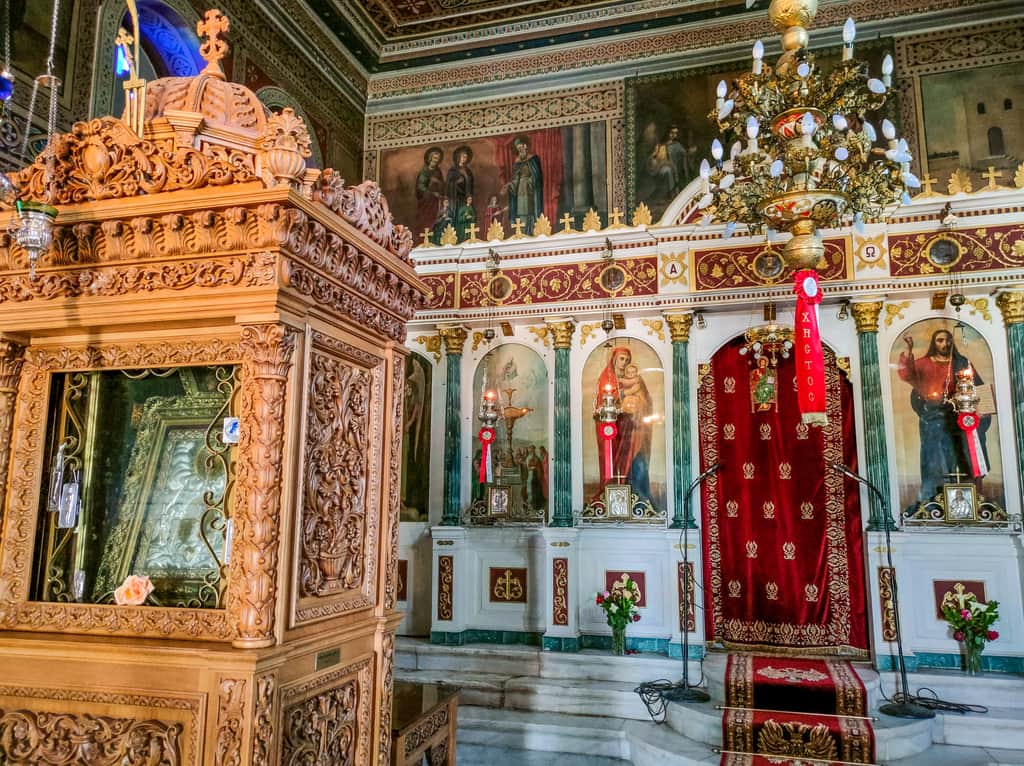
Despite initial skepticism, Maria’s revelations led to excavations that uncovered not only the icons but also signs of divine intervention. The event inspired immense devotion, prompting the construction of a church at the site, which was inaugurated in 1900.
The Church of Agios Charalambos
There is one more church on the territory of the fortress – the Church of Agios Charalambos (St. Saint Charalambos/Haralambos), which has pretty interesting history. The church was built in 1689 as a Catholic church by the Venetians and was dedicated to San Rocco (Siant Roch), one of the Plague Saints. The Venetians showed their gratitude that the town was spared by the plague by building this church.
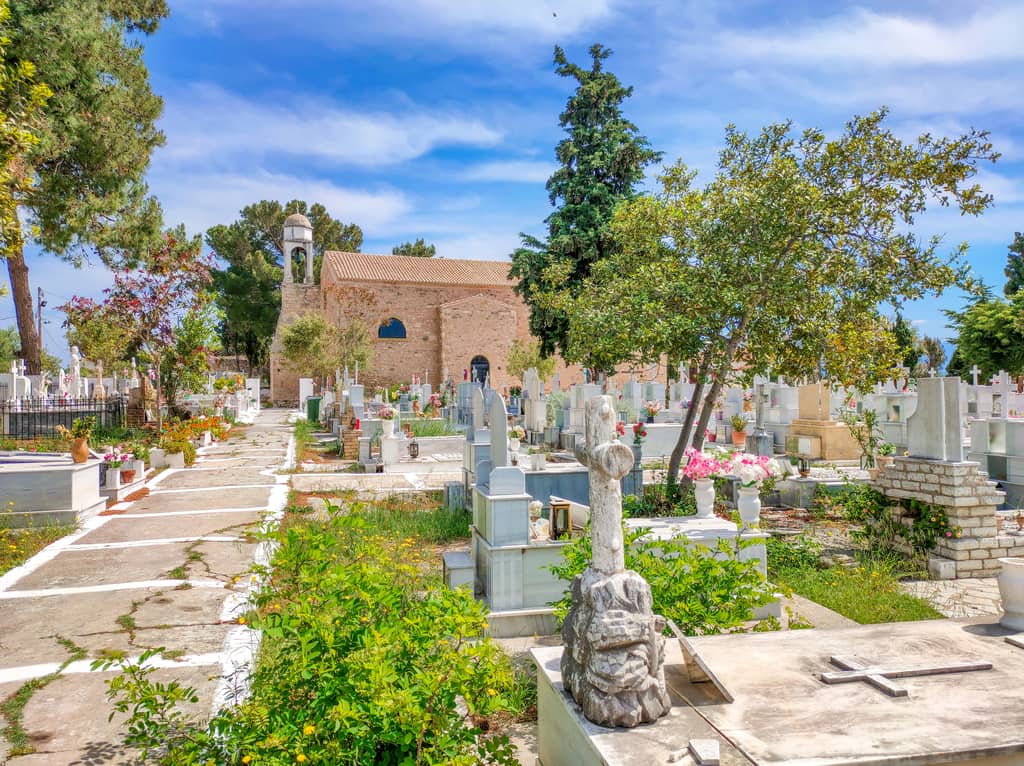
After the Ottomans took Koroni, the church was converted into a mosque. When the Greek took over the church became a Greek Orthodox church, dedicated to St. Haralambos.
In 2012 the church was completely destroyed by a fire. 6 years later, in 2018 the restoration works were finished and the church was open again. Next to the church is the cemetery of Koroni.
Step Streets & Cobbled Alleys
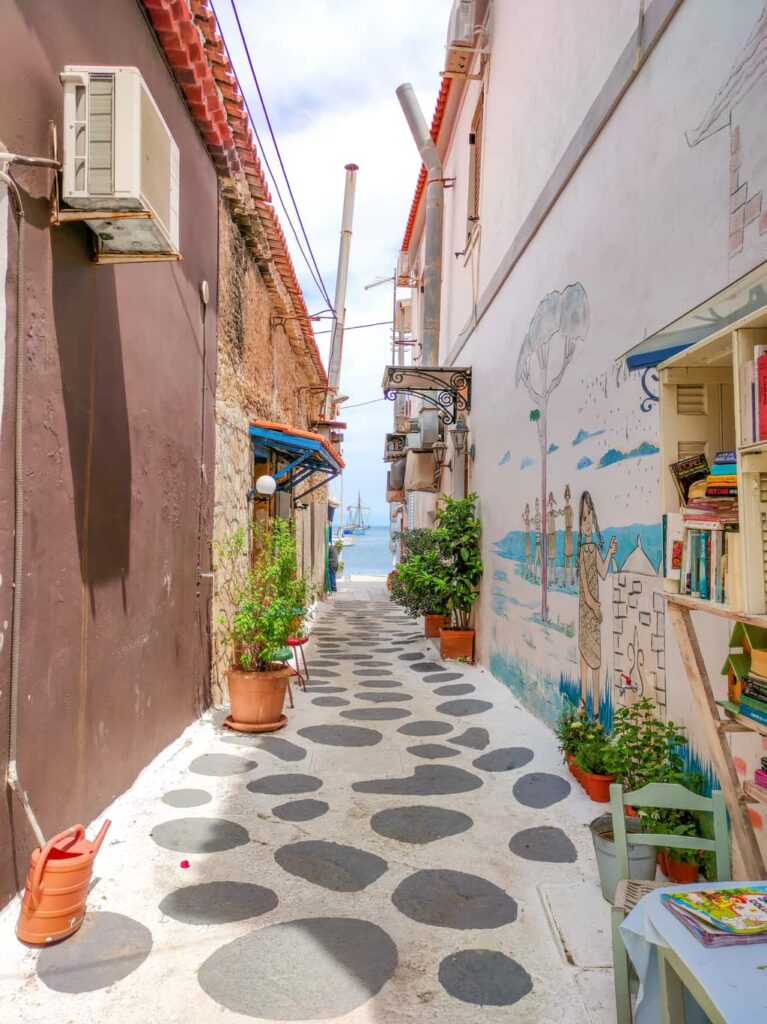
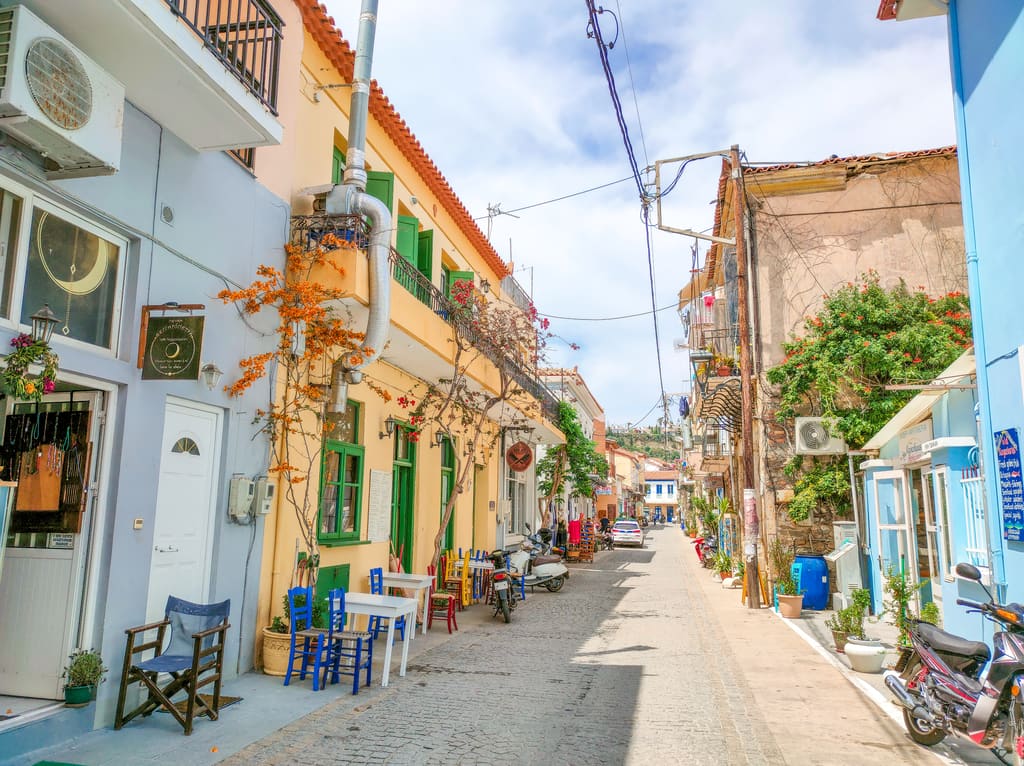
Getting out of the castle through the only surviving gate, you find yourself in an idyllic Greek town: cobblestone alleyways with whitewashed stairsteps, the inevitable white houses with red-tile roofs and blue windowsills. And explosion of colorful flowers: bougainvillea, geraniums and trumpets.
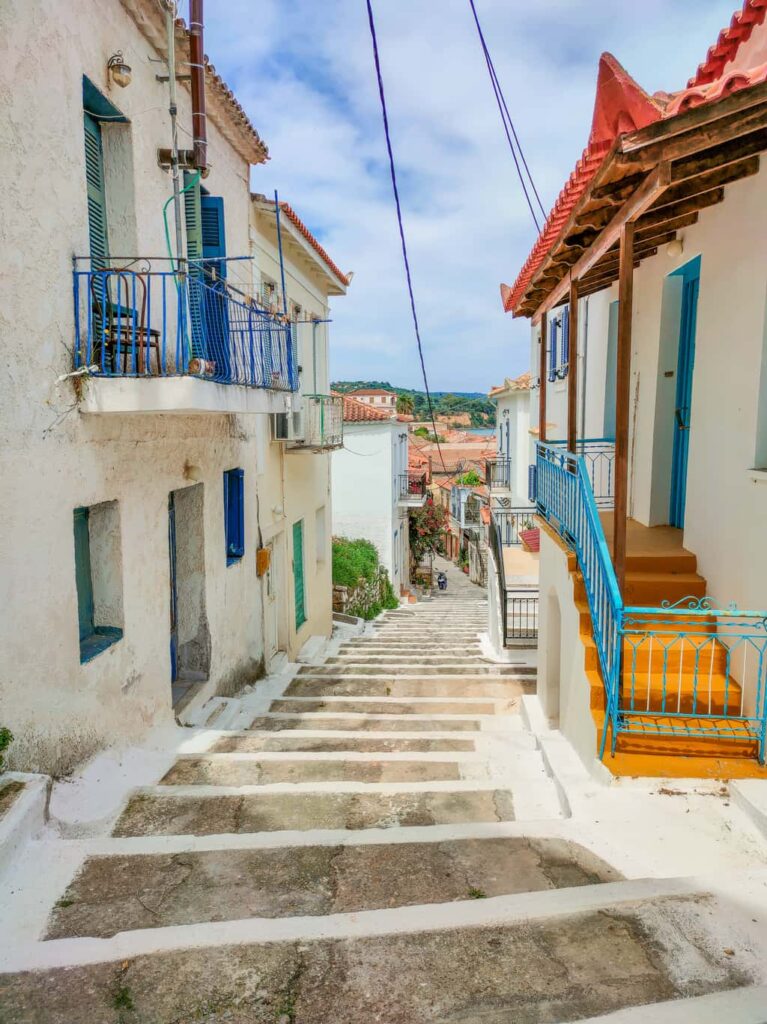
As Koroni was built on a hill, there are lots of tiny alleys interconnected with step streets: just perfect for wandering and getting lost. Well, obviously you can’t really get lost there, but you might feel lost in time.
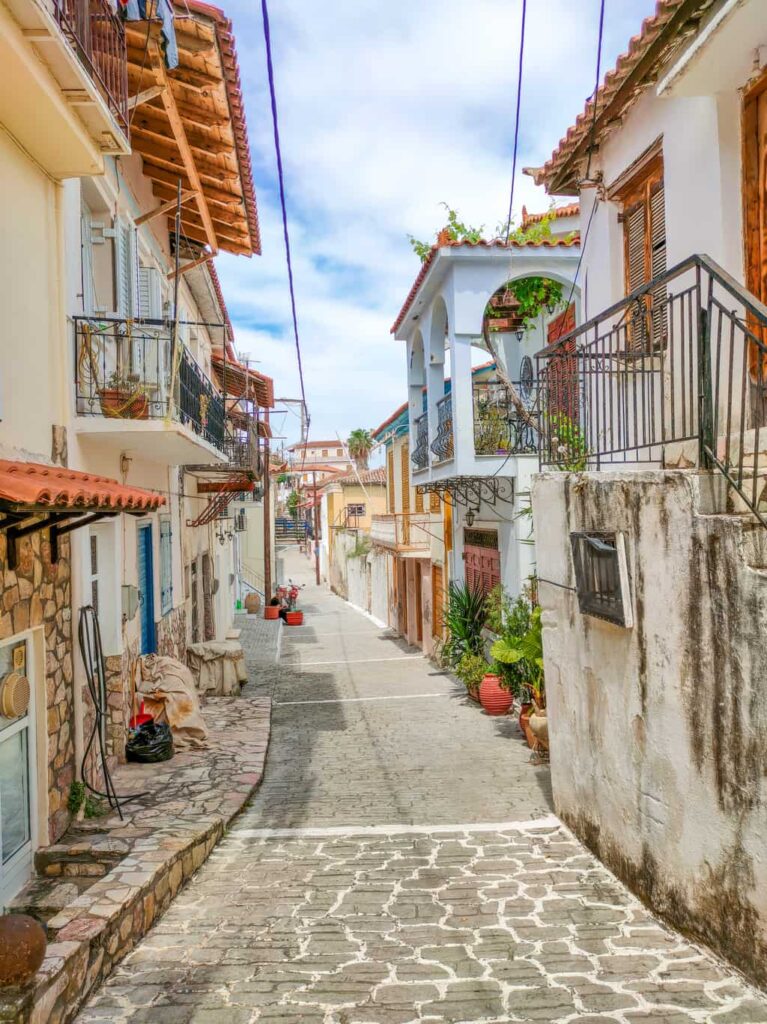
Take a walk along the harbour and the pier
For another picturesque view of the town, like the ones, you know, from the postcards, take a short walk along the pier. You will have a panorama view of the town and the small harbour with colorful boats and a couple of yachts.
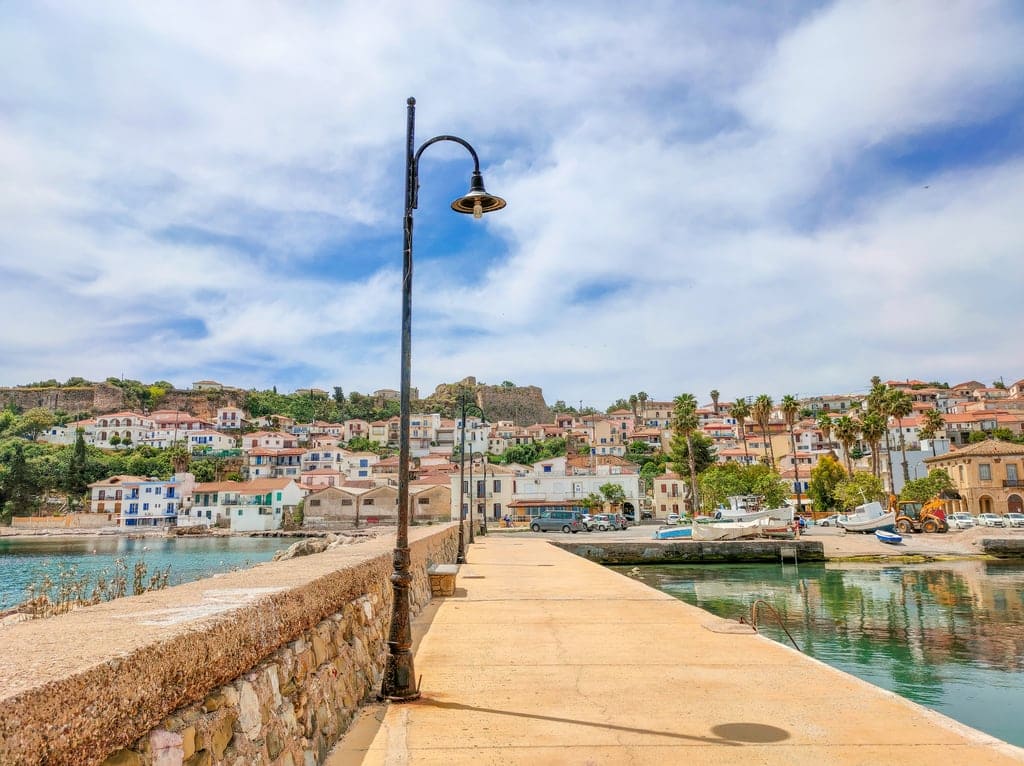
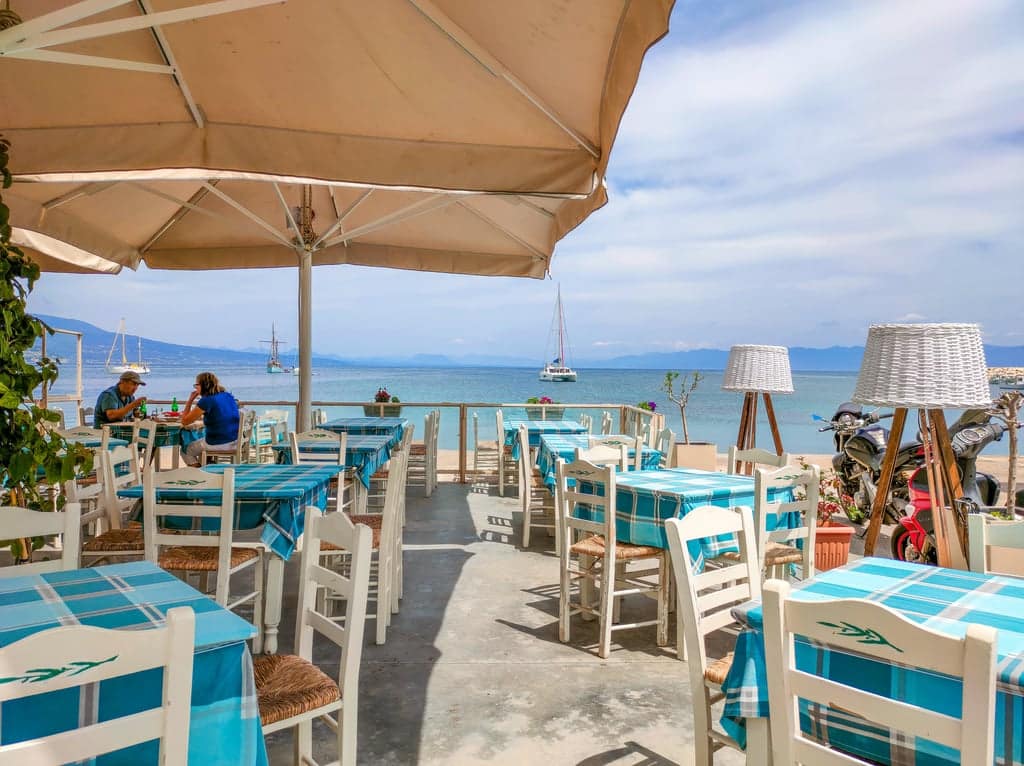
Then continue walking along the seafront to the other end of the town at Artaki beach and my advice: stop for a bite at one of the seafront restaurants.
Enjoy the local food
Talking about food, in Koroni you are at the right place. Food can’t get fresher than that. Actually Koroni is a real foody destination. A less know fact is that the town is one of the 7 ambassador towns of the Mediterranean diet, which has been included on the UNESCO List of Intangible Cultural Heritage.
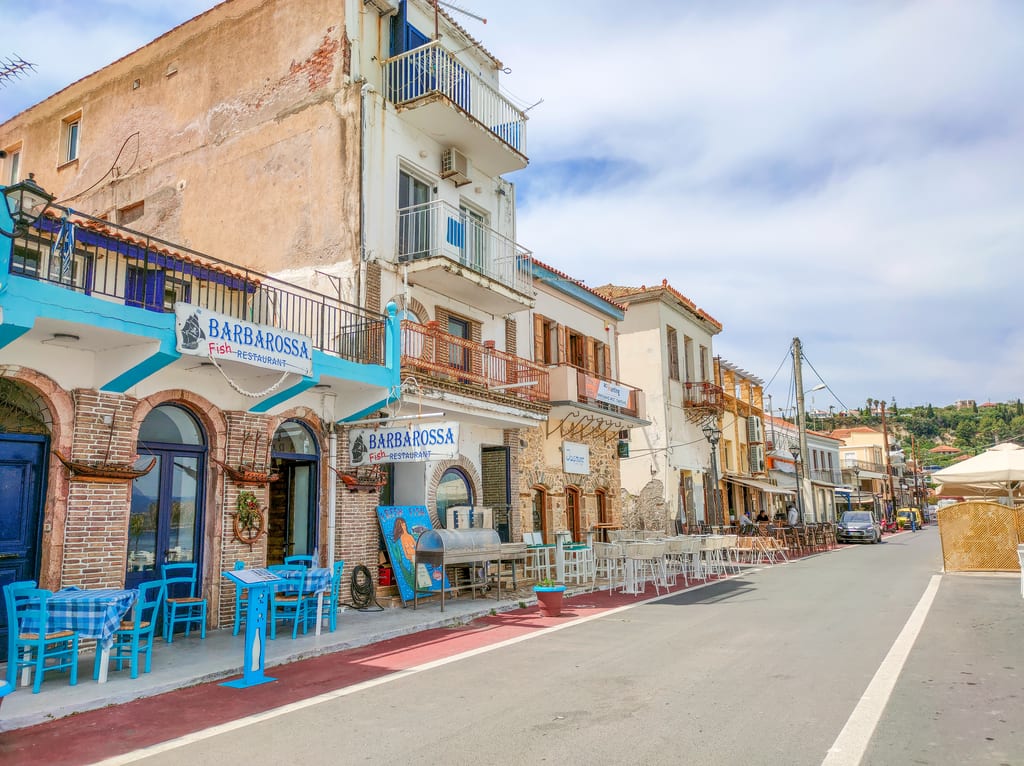
Depending on how long you will be in the town, I would have both: a lunch and a dinner. My favourite places are along the seafront with the beautiful view of the Messenian Gulf and the mountains.
Food is seasonal and honest, lavishly cooked in, soaked in or sprinkled with the local olive oil made from the Koroneiki olives. Beans, wild greens, chicken and seafood are a must to try.
Hunt for some local souvenirs
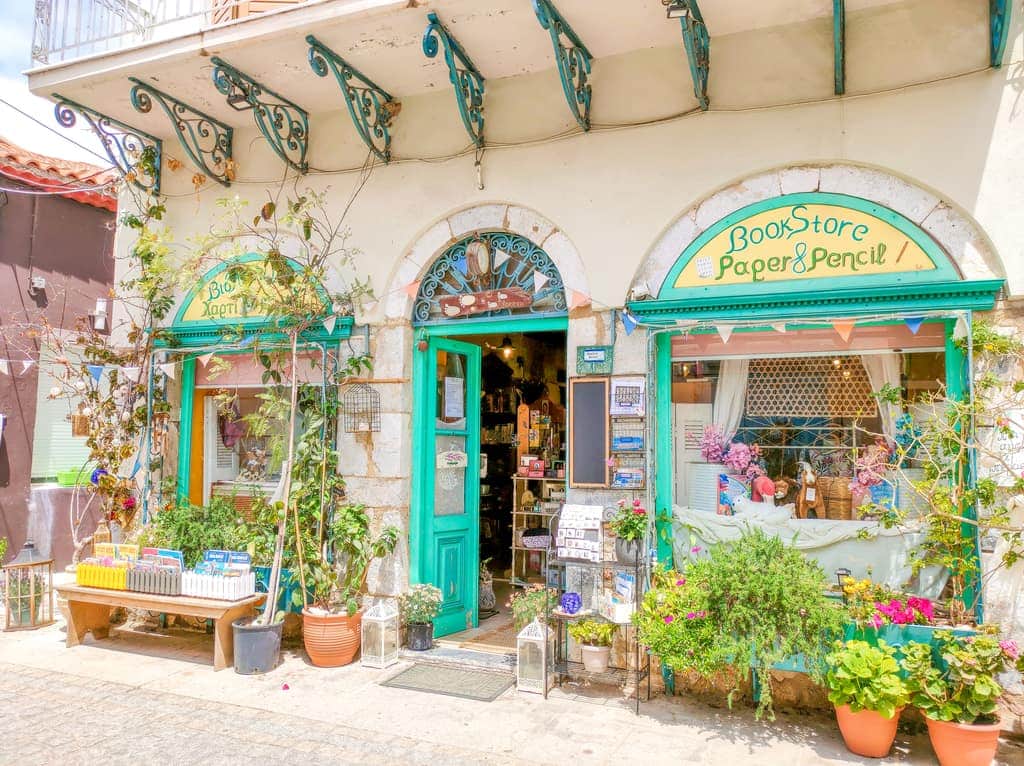
The street that’s parallel to the seafront is dotted with souvenir shops with artisanal products and handcrafts. So, stop and buy something to support the local community.
Spend some time at the beaches
If you are visiting in the summer and spending the whole day in Koroni, you might want to go to the beach, just sit and relax and enjoy the sun and the crystal clear blue water.
There are 4 beaches in the town. There’s the lovely Zaga beach and further along the coastline is the Memi beach, which is a kind of extension to the Zaga beach.
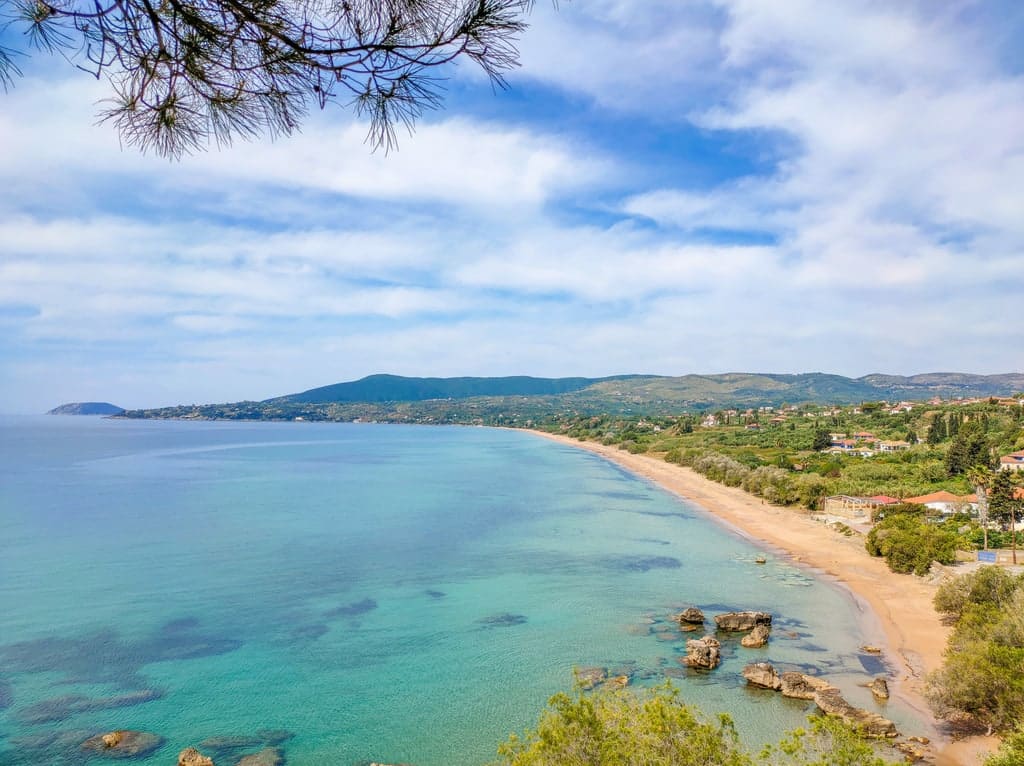
On the other side of the town, where the seafront street with the restaurants ends, is the Artaki beach. It’s a gray sand and pebble beach with beautiful turquoise waters. Clear water flows from the Artakio rock, which is said to have magical properties. According to tradition, a fairy with golden hair stands on the rock and blesses the water. One story claims that if a single person sees the fairy and drinks the water in Koroni, they’ll soon get married.

If you are preparing for a trip in Greece and Peloponnese, you might want to check out the following posts: