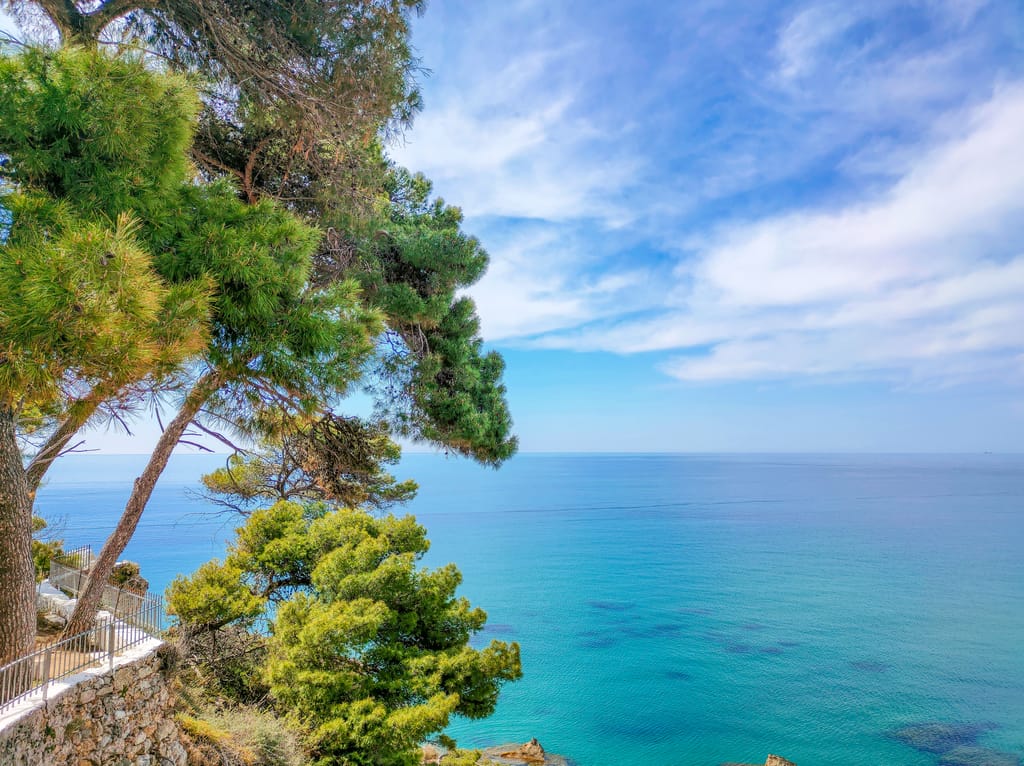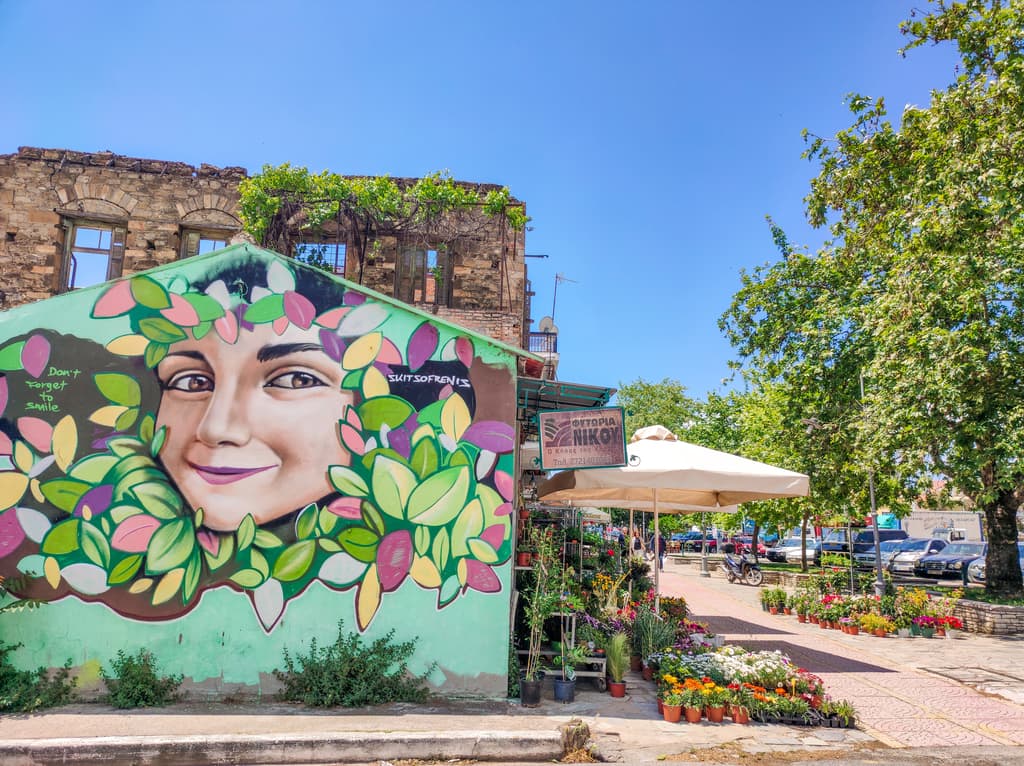
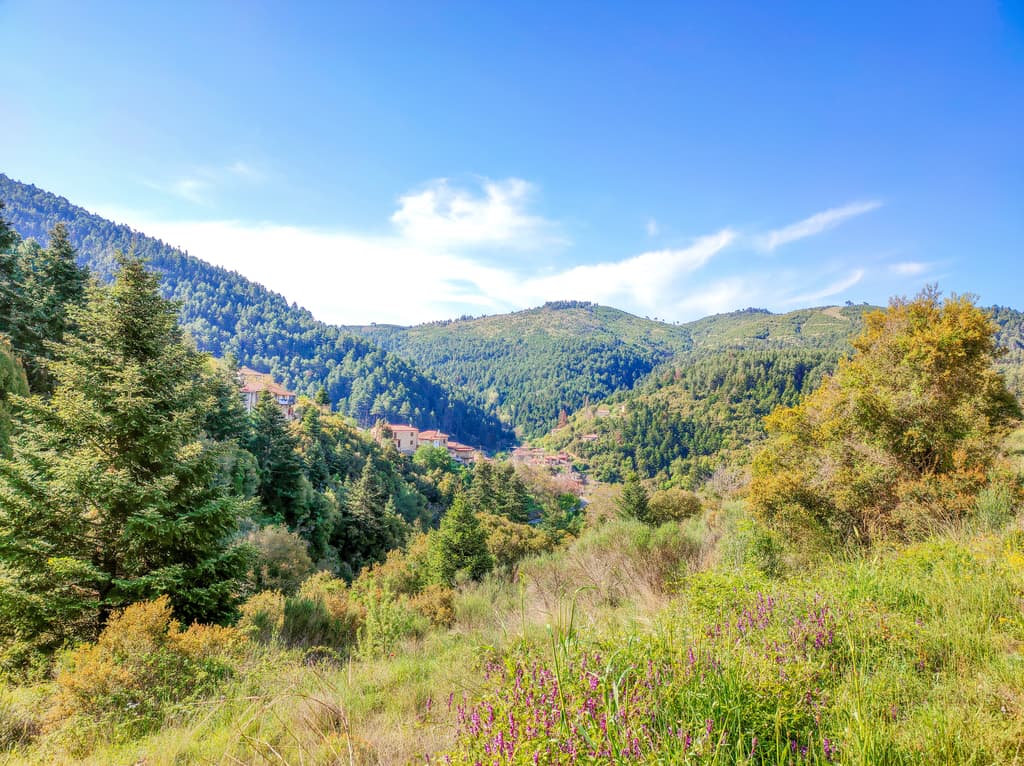
Can you still visit Greece without the hordes of tourists? Is there still a place left in Greece away from the mass tourism? The answer is yes. There’s so much more to Greece than Athens, Santorini and Mykonos, and you don’t need to do much, just be open to visiting unknown places.
This itinerary for 4 days in Peloponnese will take you from the mountains to the sea and you will be able to uncover the various layers of Greek history, starting from Ancient Greece, going through the Byzantian and Venetian times, unveiling a bit of the Ottoman dominance and ending up with what modern Greece today is.
If you are interested into spending more time in Peloponnese, why not add a couple of more days in Kalamata. Have a look at my suggestions for spending 4 days in Kalamata with day trips to Koroni and Kardamyli.
DISCLOSURE: This post contains affiliate links. If you make a purchase via one of those links, I will earn a commission at no extra cost for you.
I have visited this area of Greece on a FAM trip during the TBEX conference in Kalamata. Mythical Peloponnese and Travel2Peloponnese and their partners provided for all board, lodging, tours and activities on Day 2-4 from this itinerary. The opinions in this post, however, are mine and do not reflect the policy of my hosts.

Where is Peloponnese?
The Peloponnese (or Peloponnesus) is a large peninsula located in southern Greece, connected to the mainland by the Isthmus of Corinth. It boasts stunning coastlines, rugged mountains, and fertile plains. But that’s not all. Peloponnese is historically and culturally perhaps, the most significant area in Greece.
Peloponnese was the heart of the ancient Greek civilization, home to many powerful city-states like Sparta, Corinth, and Argos. The region is renowned for its rich history, ancient ruins, including Olympia (the birthplace of the Olympic Games), Messene, Epidaurus, and the strategic city of Corinth.
The rich history of Peloponnese, however, stretches even further in history with the Mycenaean Civilization (1750 – 1050 BC). Today, you can visit the archeological sites in Mycenae, Pylos and Tiryns.
In terms of administrative regions, the greater part of the peninsula belongs to the Peloponnese region, a small part in the North-West to West Greece and just a tiny part to the North-East to Attica. On its turn, the Peloponnese region is divided in 5 administrative areas: Messenia, Arcadia, Argolis, Corinthia, and Laconia.
During the Middles Ages and until the 19th century Peloponnese was known as Morea.
As you can see, it will be quite difficult to see all sites and attractions on Peloponnese only in 4 days. Such a brief time can give you only a glimpse of what Peloponnese can offer.
If you want to spend more time in Peloponnese, check also my 3-week itinerary on the Greek peninsula.
How to get to Peloponnese?
If you are visiting Peloponnese only for a short stay, the best would be to fly to Kalamata, the second largest city on the peninsula. However, the flights to Kalamata are seasonal but you can fly there from many European cities, like Amsterdam, London, Vienna, Paris, and Munich, just to name a few. At the airport you can also rent a car, as this itinerary cannot be done relying on public transportation.
Another option would be to fly into Athens and rent a car there and drive to Peloponnese. If you choose for this option, then it will make more sense to do the itinerary in reverse order, starting from Day 4 and finishing with Day 1.
How to fall in love with Peloponnese in 4 days?
This 4-day itinerary in Peloponnese is suitable for those who want to escape their busy city life and to reconnect with nature and themselves. It features some mild hiking, deserted villages, soft adventure, and loads of great local food.
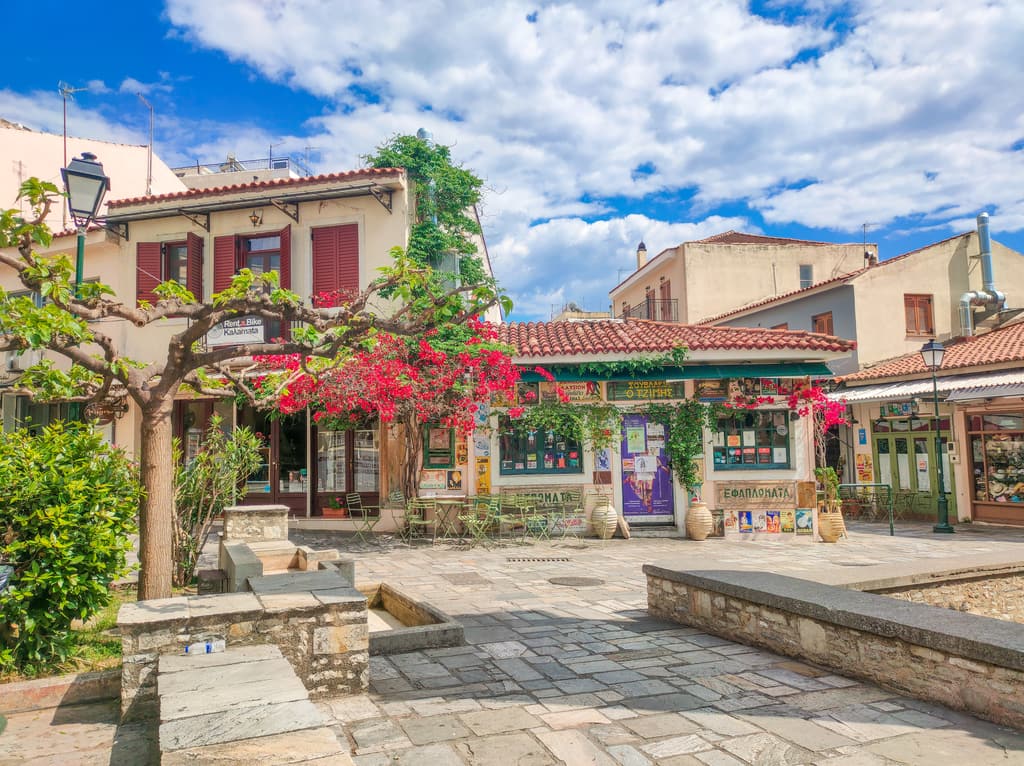
Day 1: Kalamata and Ancient Messene
Distance: 30 km
Route: towards the airport and then via Triodos and Ithomi to Mavromati
Stops: Kalamata, Ancient Messene
Recommended accommodation: Kalamata Art Rooms
Kalamata
Kalamata is the second largest city on the peninsula and the largest city in the administrative region of Peloponnese. Mostly famous for the beaches and the Kalamata olives, the city of Kalamata is quite nice. This will be the only large city in this 4-day itinerary in Peloponnese.

When in Kalamata, visit the Castle of Kalamata. From the top of the hill there are amazing views of the city and the Messenian Gulf. Depending on how much time you will have left on your fist day I can highly recommend visiting the Archeological Museum of Messenia and the Victoria Karelias Collection of Greek Costumes.
In the archeological museum you can read about the history and geography of the 4 historical regions of Messenia (Kalamata, Messini, Pylos, and Tryfilia) and see some of the major archeological sites there with the most important archeological finds being displayed.

The museum with Greek costumes is one of my favorite museums I have ever visited. It features traditional costumes and jewelry from all ethnographic areas of Greece, displayed in a beautiful way.
Both museums are located in the Old Town, so naturally you’ll have a lovely stroll along the cobblestone streets. Stop for a short break in one of the cafes on 23rd March Square, the heart of the Old Town.
Ancient Messene
The drive to Ancient Messene from Kalamata takes about 45 minutes (30 km). There is a parking just in front of the entrance of the archeological site (see the Google map above).

Ancient Messene is a true hidden gem. It’s one of the best preserved ancient Greek towns, and still not very popular among the tourists, as they mostly visit Delphi, Epidaurus, or Sparta. The Archeological Site of Ancient Messene is on the Tentative List of UNESCO World Heritage Sites.

In ancient times Messene was known as Ithome, lying in the foot of Mount Ithome. Today, you can wander along the ruins in the ancient city and see the Stadion (stade), the Gymnasium, the Agora (marketplace), the temple of Zeus, the Asclepieion, and the Odeon (ancient theatre). Just a short walk from the archeological site are the old fortifications and city walls. You can also drive to the Arcadian Gate and have a short walk there.
In the evening, you can go for dinner to a lovely taverna in the Old Town in Kalamata or have a stroll along Aristomenous Street and enjoy a meal in one of the many restaurants there.
In Kalamata I stayed in Kalamata Art Rooms on the Central Square, which I can highly recommend.

Day 2: Mount Parnon and Polydroso
Distance: 130 km/95 km
Route: you can choose from either crossing Mount Taygetos (95 km) with its hairpin roads, or take the highway to Sparti (130 km)
Stops: Agios Ioannis Chappel, Veria, Polidroso (Tsintzina)
Lunch: Oinoús / Dinner: Taverna Koukounari
Recommended accommodation: Pritanio Guesthouse
The Chapel of St. John
In the morning leave Kalamata with Mount Taygetos and head to Polidroso in Mount Parnon (also called Parnonas or Malevos). Mount Parnon separates Laconia from Arcadia and is a paradise for those who love to hike and reconnect with nature.

The morning is perfect for taking one of the many trails near Polidroso. I did a moderate hike to the cave chapel of St John the Baptist (Agios Iohannis), which took about 45 minutes. You can park just on the road and go up the hill. The chapel is carved in the rocks and dates to 1335. The front part however was built in 1826 during the raids of Ibrahim. During the Greek War of Independence the chapel was used as a refuge. From the church the views were just mesmerizing!
Tip: If you are interested in hiking in Mount Parnon, you may check out Travel2Peloponnese, as they organized this hike for us and they are specialists in this type of travel. For other outdoor activities I can recommend Hellenic Outdoor Wellness.
Veria
For lunch drive a few kilometers further and stop in the little hamlet of Veria (about 4 km from Polidroso). The place looks adorable with the stone houses, but no one lives there permanently. However, it didn’t look abandoned.

There’s a lovely taverna – Oinoús, in Veria, run by a husband and wife, where I had my lunch, and which I can absolutely recommend. The thing with such places is that they make you feel as you’ve been invited as a guest in their own home. I enjoyed my lunch, and everything was cooked to order and delicious.

Polidroso (Tsintzina)
After lunch head back to Polidroso (or Polydroso). In its best days, after the liberation of Greece, the population of Polidroso was just over 1300. Today, there live only 5 persons permanently the whole year round. Before COVID-19 the place would be deserted for the winter period, as no one lived there between October and March. The pandemic however changed this, and the village might be up to a revival.

Fun fact: Until 1976 the place was called Tsintzina, which in the local Tsakonian language means ‘crossroads’. This is also how normally the village is known among the locals, although its official name is Polidroso.
The village is lovely: stone houses with red-tiled roofs and cobblestone streets. Have a walk around and enjoy the serenity. The odds that you would meet someone while wandering around are nihil. I didn’t meet a soul.

There are 9 trails that start in the centre of the village, including the trail to the St. John Chapel, which I previous mentioned. So, you can choose to do it from the village, after you have parked your car at the hotel.
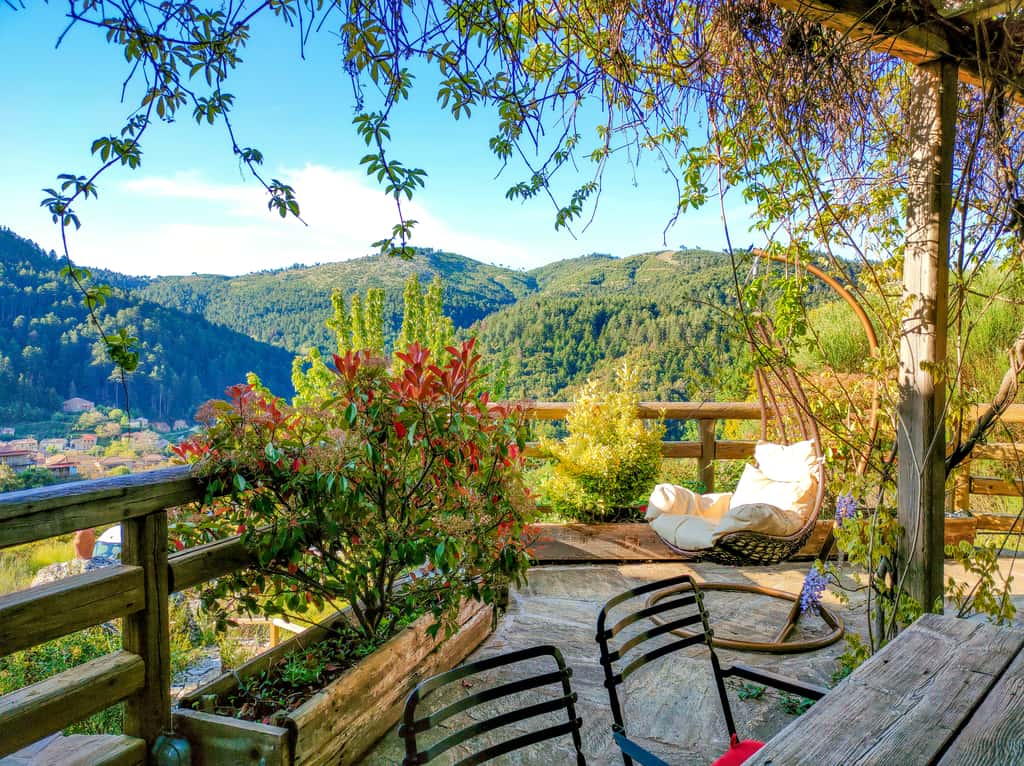
I also loved hanging out in the hotel (I stayed at Prytaneio/Pritaneio). They have these beautiful sitting areas outside, as well as a cozy lobby with a fire place, where you can enjoy a drink and browse through the collection of travel magazines they have, or chit-chat with the kind owners.

For dinner go to Koukounari, the local taverna, located on the village square behind the church. The owner is simply amazing and honestly, I had there one of the best meals ever in my life.

When the chef cooks from their heart, puts their soul in every spoon and uses local ingredients with the shortest possible farm-to-table path, the food is just heavenly delicious.

Day 3: The Castle of Geraki and Leonidio
Distance: 85 km
Route: see the free Google map included in the post
Stops: The Castle of Geraki, Kosmas, Moni Elonis, Leonidio, and Tyros (optional)
Recommended accommodation: Hotel Hatzipanayiotis in Leonidio
After breakfast leave the adorable Polidroso and head southwards to Geraki. On a hill above Geraki you’ll find the Castle of Geraki.
The Castle of Geraki
Built by the Franks in the early 13th century, the Castle of Geraki was captured by the Byzantines in 1262 and became one of the most important medieval cities in Morea (Peloponnese). The Ottomans took over Geraki in 1460. Somewhere in the 15th/16th century, the fortress and the settlement were abandoned.

Today, you can wander along the ruins of this medieval city and enjoy the beautiful views from the top of the hill. The Castle of Geraki is a real hidden gem, mostly outshined by Mystras, but not as touristy as the latter.
You can park your car at the parking in front of the entrance of the castle.

Kosmas
After leaving the castle, head north towards Leonidio and stop for lunch in little village of Kosmas. The village is surrounded by forests of chestnut trees and pine with lots of hiking trails for the outdoor enthusiasts. In the building of the old school there’s an interesting ethnographic exhibition showing the local ways of everyday life – the Kosmas Folklore Museum.

Interesting fact is that during WWII more than 98% of the houses in the village were destroyed. The village came back from the ashes, literally, and the beautiful stone houses were carefully restored. In the Folklore Museum there are photos of post-war Kosmas completely in ruins.

The lovely village square (Plateia) is dominated by the imposing church of Agioi Anargyroi (The Holy Unmercenaries) and a bunch of large plane trees. There are lots of restaurants and cafes around the square, so just pick up one for lunch and enjoy. The local specialty is the goat soup.
Moni Eloni
After lunch continue towards Leonidio. A few kilometers further north of Kosmas is the next stop of this 4-day itinerary in Peloponnese – Moni Eloni, the monastery glued to the rocks. When you come from Kosmas, you won’t see it, but if you are driving the other way, from Leonidio, you’ll see it high in the vertical cliffs above the gorge. You can park just in front of the entrance of the Monastery.

The Monastery of Elonis was built first in 1300 and in the 18th century it was destroyed by the Ottomans in the aftermath of the local revolt. Later, the Monastery was restored, and the church was built at the beginning of the 19th century. The view from the Monastery is absolutely magnificent!
Interesting fact is that until 1971 it was a men’s monastery and in 1972 it became a women’s monastery. Moni Eloni is also famous for the miraculous icon of Panagia (Virgin Mary) that got stolen in 2006.
Leonidio
After visiting the monastery continue all the way through the Dafnon Gorge to Leonidio. It’s a short drive but a very scenic one. The red cliffs towering above the gorge are absolutely spectacular.

Leonidio is a small town in Arcadia and the main city of Tsakonia. Tsakonia is a region in Greece where they speak the Tsakonian language, which is different from the Modern Greek. Tsakonian is derived from the Dorik Greek and not from the Classical Greek. Tsakonians are also considered descendants of the Dorians, one of the 4 major ethnic groups who lived in Ancient Greece.
I had the privilege to attend a festival of the Tsakonian culture in Tyros, where they presented their language and the typical dances from the area – the Tsakonikos.
Leonidio is also famous for the Tsakonian eggplant (aubergine), which is sweater compared to other varieties, and has a Protected Designation of Origin (PDO) in Europe. So, when in the area you have to try this local vegetable!
Take a walk in the town and enjoy the authentic atmosphere. You’ll spot the colorful houses which are typical of Tsakonia, as well as the large mansions with tower houses and walled courtyards.

You can stay in such a house in Leonidio, as there are some hotels in authentic old houses. I can highly recommend Hotel Hatzipanayiotis (Archontiko Hatzipanayiotis). I stayed at their Sweet Acacia (Γαζία/Gazia) room and loved it. The courtyard of the hotel has this typical pebble mosaic and lots of cozy corners where you can sit and relax or enjoy a drink chatting to someone.
Tyros
For dinner you can either choose to stay in Leonidio or go to the beach. When I stayed in Peloponnese, we stopped by in Tyros to see that festival of the Tsakonian culture and enjoyed a dinner in one of the fishermen restaurants at the beach. Tyros is an up-and-coming seaside town untouched by the mass tourism and a true hidden gem.

I had dinner at Akrogiali, which I absolutely recommend. The food couldn’t get more delicious or the fish fresher than this.

A local delicacy to try is the pickled wild hyacinth bulbs (pickled volvoi).
Day 4: The beach or Climbing Experience
Distance: 10 km (not considering driving back to Kalamata or Athens)
Stops: Leonidio, Poulithra
Lunch: Myrtoon in Poulithra
For the morning of the 4th day in Peloponnese you can choose from a few things: you can either go to the beach and spend a relaxed morning, followed by a lunch, or try rock climbing in Leonidio, or just spend the morning in the town walking around and doing some sightseeing.
Rock climbing in Leonidio
In the last years Leonidio developed as a tourist destination for rock climbing. No matter whether you are an experienced rock climber or someone that has never set a foot on a rock, like me, Leonidio won’t disappoint. The red crags jutting above the town are quite inviting and there are climbing options for all levels.
Beach time
Leonidio is located just a tiny bit inland, so if you want to go to the beach, you’ll need to drive a bit, but there’s an amazing choice of secluded beaches with clear turquoise waters. The nearest beach to Leonidio is Lakkos, just to the north of the port. It takes about 45 minutes walking from downtown Leonidio. To the south of the port is Plaka (Paralia Plakas), a small fishermen village with a lovely beach, also at a walking distance from Leonidio, about an hour.

You can also decide to drive a bit to the north, all the way to Tyros, or choose one of the beaches on the way: Thiopafto, Sampatiki, or Livadou. Driving to the south of Leonidio, you can stop at Gkriza or Poulithra. I went to Poulithra and enjoyed my time walking around and just relaxing.
Wherever you’ll go, there will be a good choice of restaurants for lunch. I can highly recommend Myrtoon, located straight on the beach in Poulithra.

So that’s the end of this 4-day itinerary in Peloponnese. Depending on your travel arrangements after lunch you can either go back to Kalamata or to Athens.
Prepare for your trip to Peloponnese
Read these posts to prepare for your trip to Peloponnese or to get inspired to visit other places in Peloponnese.