
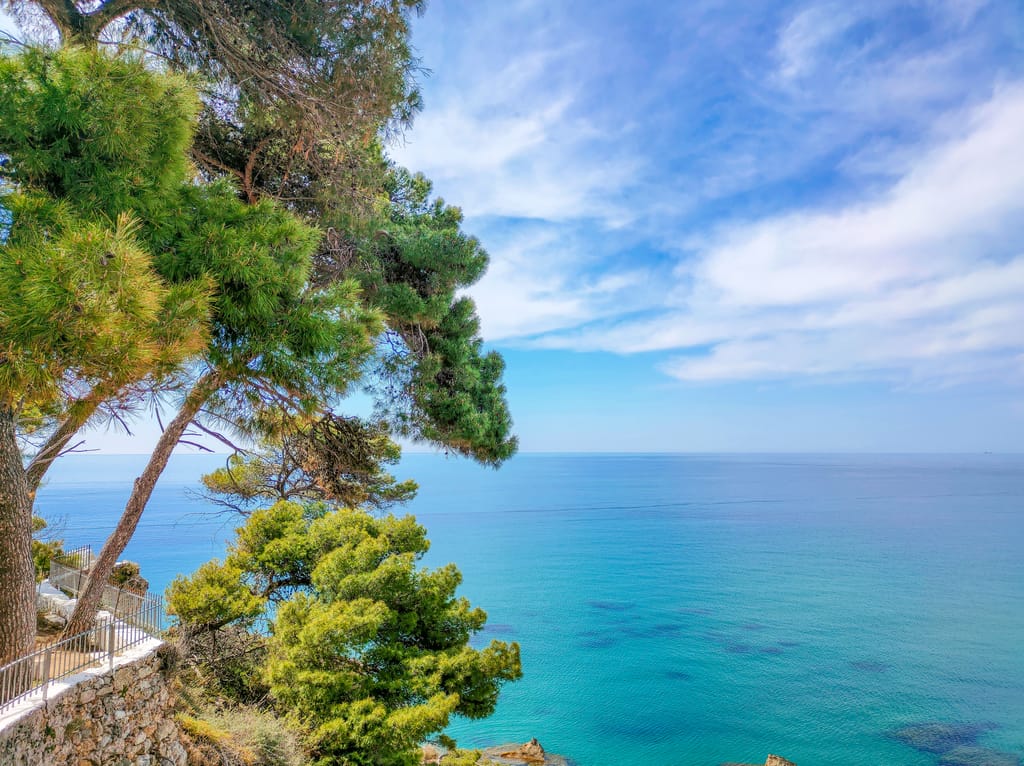
Known for its beaches and for the olives, Kalamata is often overlooked as a tourist destination. If you still decide to spend a couple of days in this city on the Messenian Gulf, you will be surprised to find out that it’s a vibrant city with a charming old town and a proud historical past.
You won’t find world-famous museums in Kalamata or striking architecture and still the city is worth visiting for its slow-paced life, great food, and a few hidden gems, like the Victoria Karelias Collection, the street art and the Archeological Museum.
This 4-day itinerary in Kalamata will not only show you the beauty of this laid back Greek town, but will also take you to a couple of charming little places on the Peloponnese peninsula. This itinerary is suitable for people who don’t want to rent a car, as all places are accessible by bus or a taxi. Read further to find out how to spend 4 perfect days in Kalamata!
DISCLOSURE: This post contains affiliate links. If you make a purchase via one of those links, I will earn a commission at no extra cost for you.
How to get to Kalamata?
If you are visiting Peloponnese only for a short stay, the best would be to fly to Kalamata, the second largest city on the Peloponnese peninsula. Although, flights to Kalamata are seasonal, you can fly there from many European cities, like Amsterdam, London, Vienna, Paris, and Munich, just to name a few.
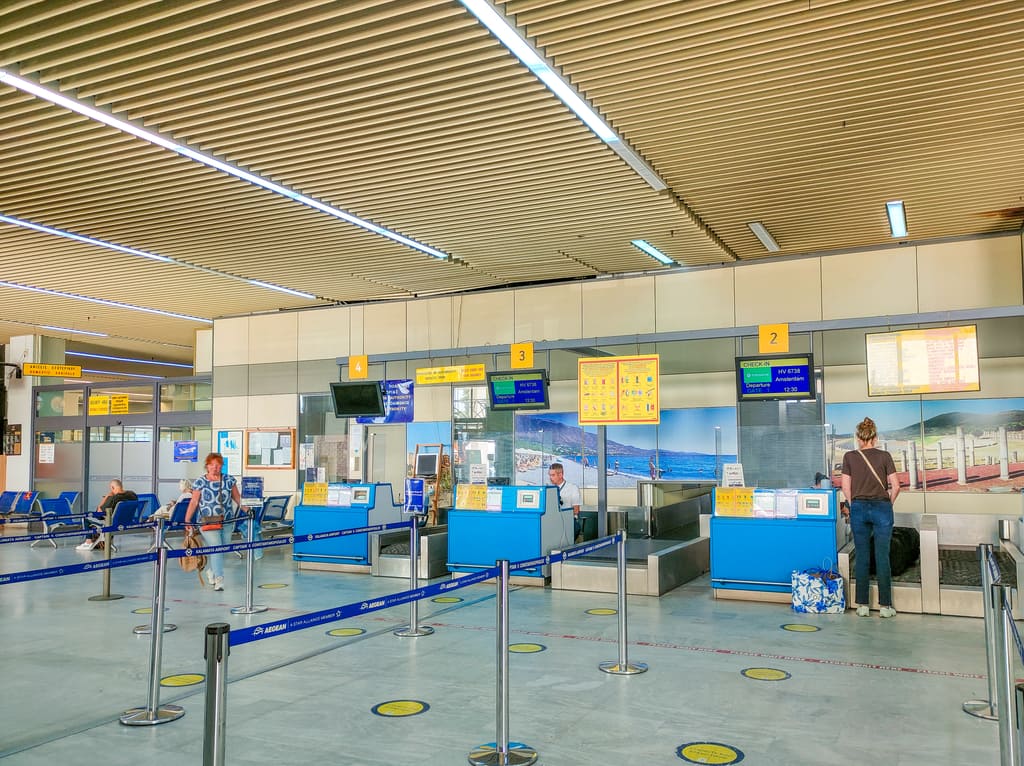
Another option would be to fly into Athens and rent a car there and drive to Peloponnese. If you choose for this option, then it will make more sense to do the itinerary in reverse order, starting from Day 4 and finishing with Day 1.
How to get around Kalamata without a car?
Getting in and around Kalamata without a car is easy. There’s city bus lines and regional bus lines operated by KTEL. Also taxis are quite affordable, especially within the city. I did one of the day trips in this itinerary by taxi, the one to Ancient Messene, which I shared with a friend.
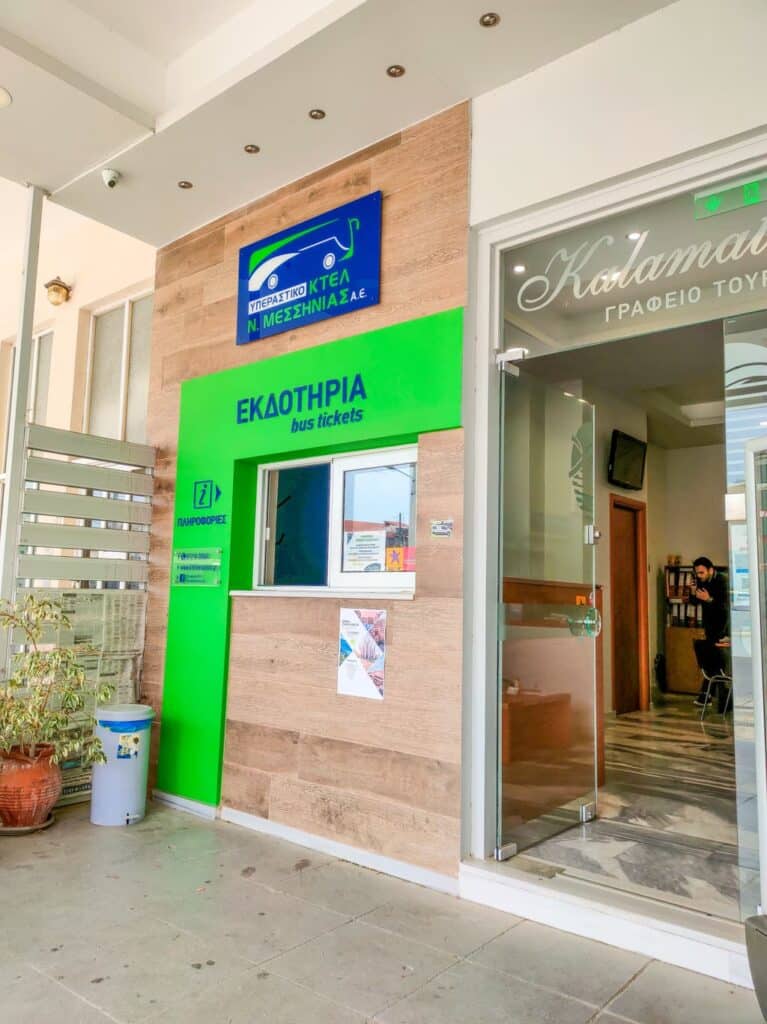
For getting on the regional bus lines to Koroni or Kardamyli, for example, you can go to the bus station, but there’s also a bus stop that is closer to the city centre, where all buses stop and there’s a kiosk there where you can buy tickets and where they will help you with information.
Practical info:
- Kalamata Bus Station: Artemidos 58, Kalamata 241 00
- Ticket Office: Artemidos 87, Kalamata 241 34
If you don’t want to rely on public transportation, you can still rent a car at Kalamata airport. That will make the day trip to Kardamyli a breeze. But read further and check for yourself whether you need a rental or not. I did this itinerary using bus and taxi.
How to spend 4 days in Kalamata?
This 4-day itinerary with a base in Kalamata features one whole day in Kalamata, a half-day trip to Ancient Messene, a full-day trip to Koroni, and a half-day trip to Kardamyli. Depending on when you will be arriving in Kalamata you can choose to switch the order of visiting the places or combine them otherwise. The half day to Kardamyli is fixed in the afternoon due to the bus schedule, but if you decide to rent a car, then you can spend a whole day in this adorable little place.
So here is my itinerary for 4 days in Kalamata without a car, following exactly what I did in Greece when I was there. I spent more time on Peloponnese, visiting other places, as well as participating in the TBEX travel bloggers conference.
Read more:
Things to do and see in Kalamata – discover all attractions and highlights
4-day itinerary in Peloponnese – for this itinerary you will need a car
3-week road trip in Peloponnese
One day in Koroni – best things to see and do
On the map below you can see all places included in this 4-day itinerary in the Kalamata:
Day 1 – Kalamata
Distance: stay in the city
Transport: not needed
Lunch: a café in the Kalamata Old Town
Dinner: a tavern in the Kalamata Old Town
Kalamata is the second largest city on the Peloponnese peninsula and the largest city in the administrative region of Peloponnese. Mostly famous for the beaches and the Kalamata olives, the city of Kalamata is quite nice.

Start your day by visiting the Castle of Kalamata. From the top of the hill there are amazing views of the city and the Messenian Gulf. Then go down to the Old Town and have a walk there. You can visit the Archeological Museum of Messenia and the Victoria Karelias Collection of Greek Costumes. Both museums are open till about 8 pm on certain days, so you can easily manage both of them in one day, leaving one of them for in the evening.

In the archeological museum you can read about the history and geography of the 4 historical regions of Messenia (Kalamata, Messini, Pylos, and Tryfilia) and see some of the major archeological sites there with the most important archeological finds being displayed.
The museum with Greek costumes is one of my favorite museums I have ever visited. It features traditional costumes and jewelry from all ethnographic areas of Greece, showcased in a beautiful way.
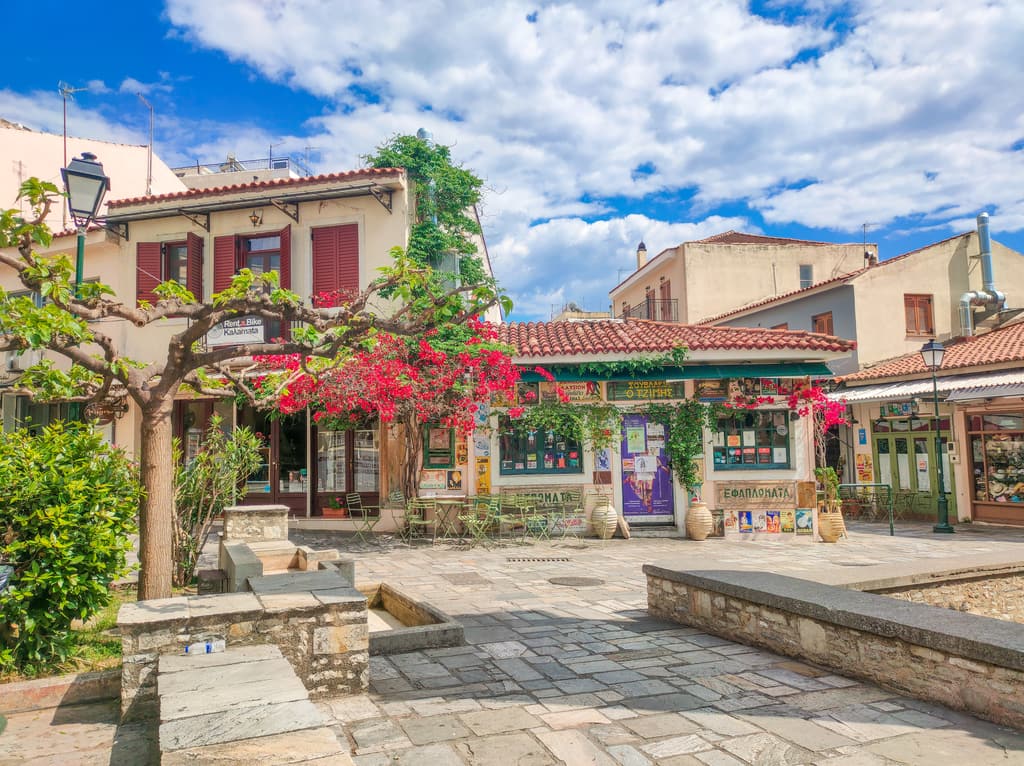
Both museums are located in the Old Town, so naturally you’ll have a lovely stroll along the cobblestone streets. Stop for a short break in one of the cafes at 23rd March Square, the heart of the Old Town.
Tip: Have a look at this post for all things you can do and see in Kalamata.
Day 2 – Ancient Messene
Distance: 35 km
Transport: taxi, no direct bus connection
Lunch: Ithomi (great views!) in Ancient Messene or at one of the cafés at Platea (the Main Square) in Kalamata
Dinner: Kalamata Old Town
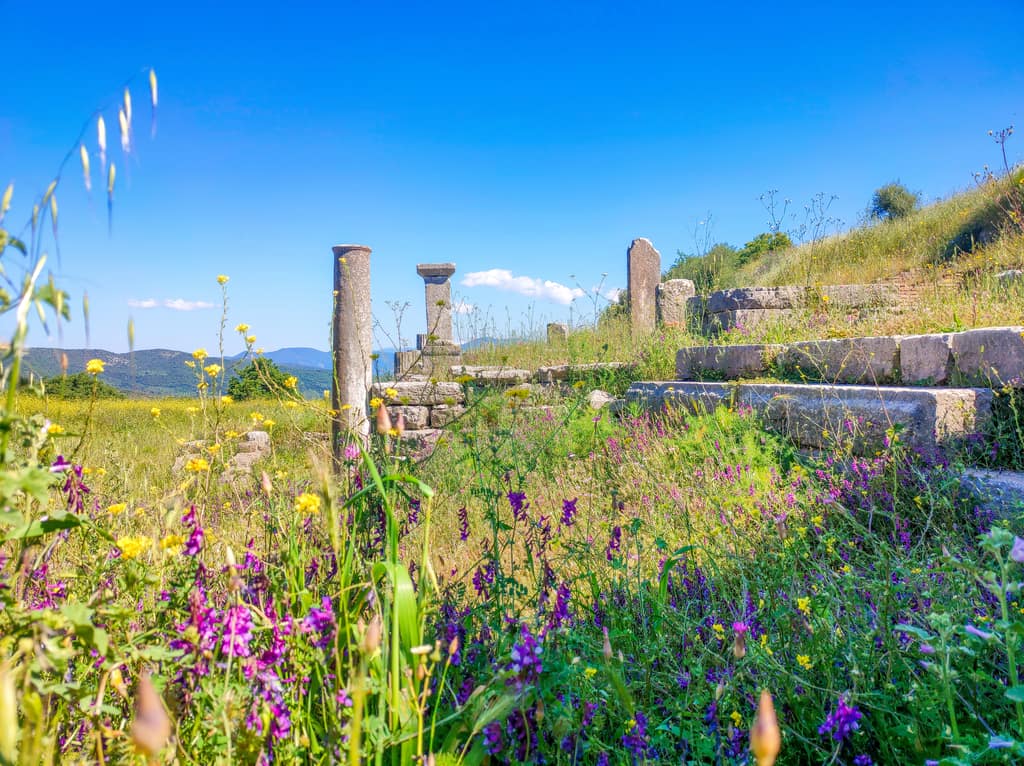
Ancient Messene is a true hidden gem. It’s one of the best preserved ancient Greek towns, and still not very popular among the tourists, as they mostly visit Delphi, Epidaurus, or Sparta. The Archeological Site of Ancient Messene is on the Tentative List of UNESCO World Heritage Sites.

In ancient times Messene was known as Ithome, lying in the foot of Mount Ithome. Today, you can wander along the ruins in the ancient city and see the Stadion (stade), the Gymnasium, the Agora (market-place), the temple of Zeus, the Asclepieion, and the Odeon (ancient theatre).
Just a short walk from the archeological site (about 15-20 minutes) are the old fortifications and city walls. You can walk to Arcadian Gate after visiting the Archeological site, as there is an entry fee for the site. The Arcadian Gate is free to visit.
Practical info:
- As with most Greek places there is an Ancient version of a town and a modern one. So, there is Ancient Messene and the modern-day Messini, which should not be confused, especially when arranging transportation.
- The arrangement we made with the taxi was via the hotel where the friend of mine was staying. So, we arranged for the taxi to take us to Ancient Messene, wait for us for 2 hours and take us back to Kalamata.
- When you make your own arrangements maybe consider also visiting the Archeological Museum of Ancient Messene, where you can see the artifacts found at the archeological site. Unfortunately, we didn’t have enough time for the museum, as we didn’t know about it and didn’t plan accordingly.
Day 3 – Koroni
Distance: 55 km
Transport: KTEL bus, click here for the schedule
Lunch: one of the taverns at the beach in Koroni
Dinner: Koroni or Kalamata depending on when you will go back
Koroni is a super charming little town on the eastern coast of the first leg of Peloponnese and is a wonderful day trip from Kalamata. There are regular buses from Kalamata to Koroni operated by KTEL and the trip takes about 1,5 hrs. You can easily spend a whole day in Koroni and even include a half day at the beach, if you are visiting in the summer.
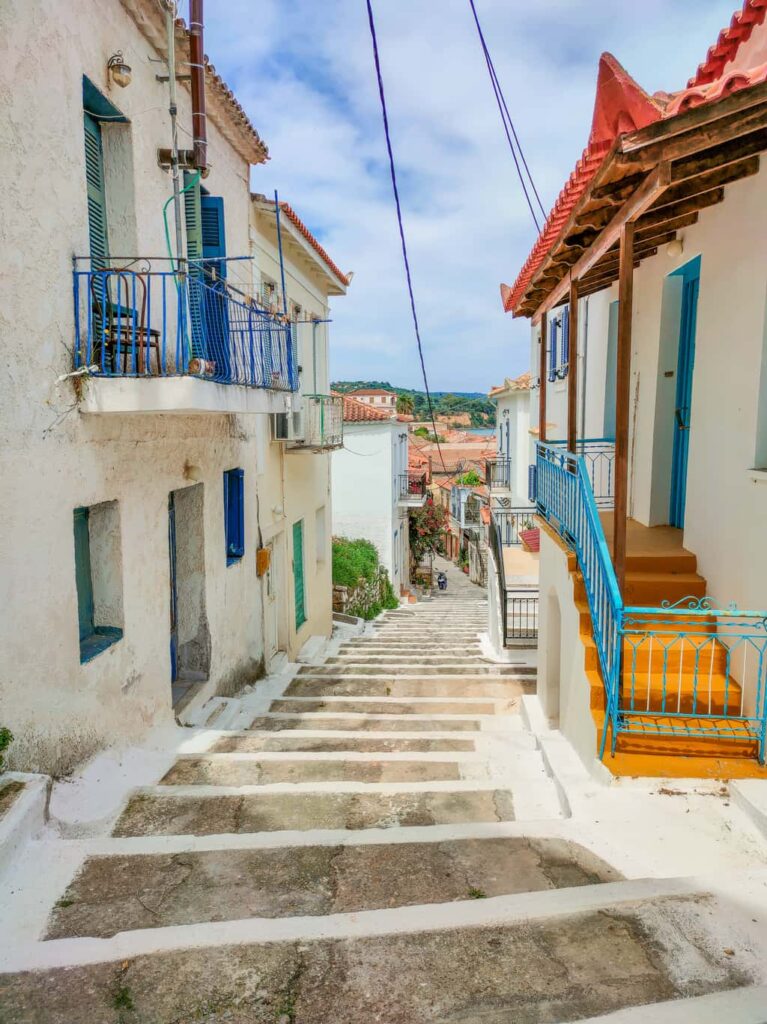
Once called “The Eyes of Venice“, Koroni may have lost its significance as a trading harbour and a military fortress over the centuries, but it never lost its pure charm. The town emerged on the ruins of the Ancient Asini, when the population of Ancient Koroni fled southwards in 7-8 century BC following Slavic and Arab raids.
Fun fact: As with most places in Greece, there is also an Ancient version of Koroni (ancient Koroni or Corone/Korone), which as usual is located somewhere else, and does not coincide with the modern version of the town. Ancient Koroni was located further north on the coast near the modern town of Petalidi.
The Venetians took over the town in the early 12th century, built there a castle, and for 3 centuries long Coron, the way they called it then, flourished as an important stop on the way to the Holy Land. Then the Ottomans came in the 16th century and stayed there until 1825 when Greece gained its independence, although the Venetians managed to take over Koroni at the end of the 17th century, but the Venetian rule lasted only for 30 years this time.
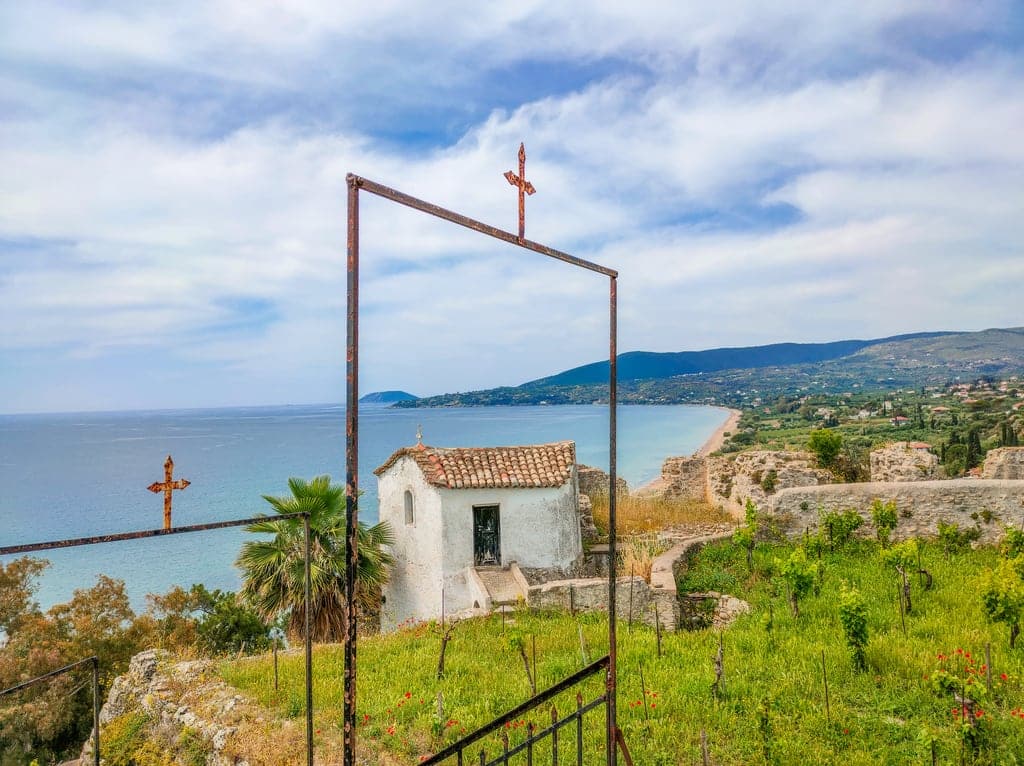
When in Koroni walk to the top of the fortified castle for some amazing views and stroll around. There are a couple of churches and monasteries on the grounds of the castle and adjacent to it, the most interesting of which is the Temple of Apollo converted into a three-aisled Byzantine basilica dedicated to Hagia Sophia, that’s in ruins now, with only the northern aisle rebuilt in the 12th century as a smaller church. The second interesting church is the one of Panagia Eleistria surrounded by a lovely garden from which there is is magnificent view over the Aegean Sea.
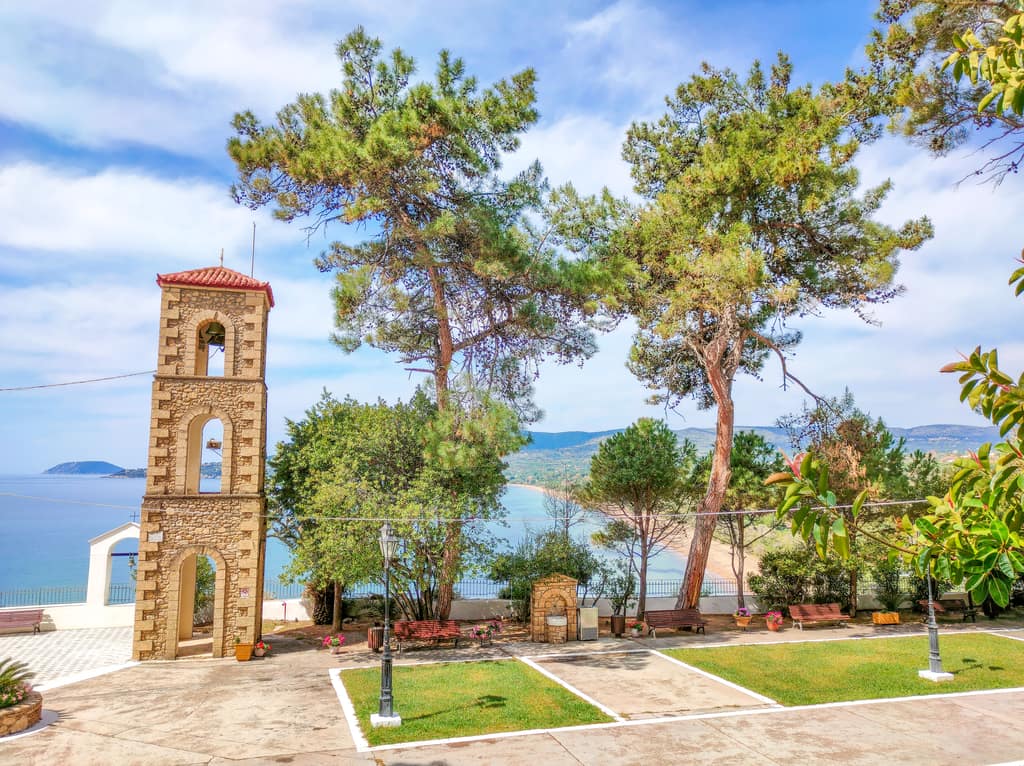
Getting out of the castle through the only surviving gate, you will find yourself in an idyllic Greek town: cobblestone alleyways with whitewashed stairsteps, the inevitable white houses with red-tiled roofs and blue window frames. And an explosion of colorful flowers: bougainvillea, geraniums and trumpets.
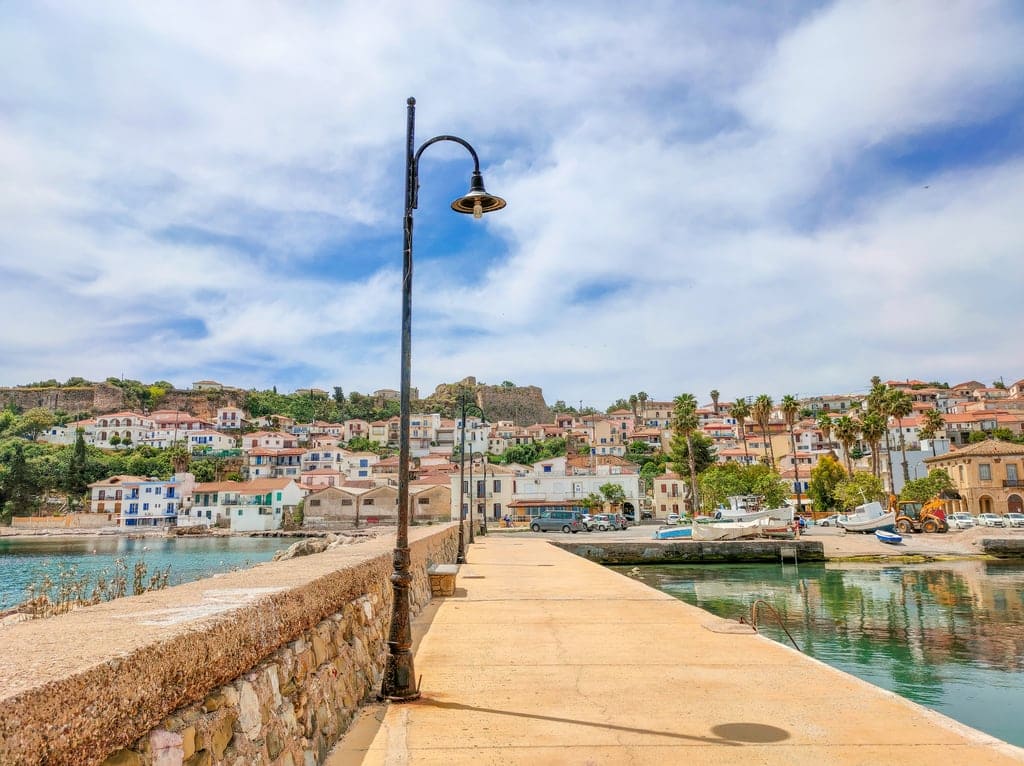
For another picturesque view of the town, like the ones, you know, from the postcards, take short walk along the pier. The street that’s parallel to the seafront is dotted with souvenir shops selling artisanal products and handcrafts. So, stop and buy something to support the local community. Then finish with a meal at one of the numerous tavernas along the seafront.
Fun fact: Did you know that Koroni is a foody destination? The town is one of the 7 ambassador towns of the Mediterranean diet, which has been included on the UNESCO List of Intangible Cultural Heritage.
Day 4 – Kardamyli
Distance: 35 km
Transport: KTEL bus, click here for the schedule
Lunch: Kalamata
Dinner: Kalamata
When I stayed in Kalamata I had to visit Kardamyli. Relying only on public transport it was a challenge but not impossible and I am happy I took that trip. Despite that it was on a Tuesday and the museum was closed and despite the fact I had only about 2 hours to spend there.
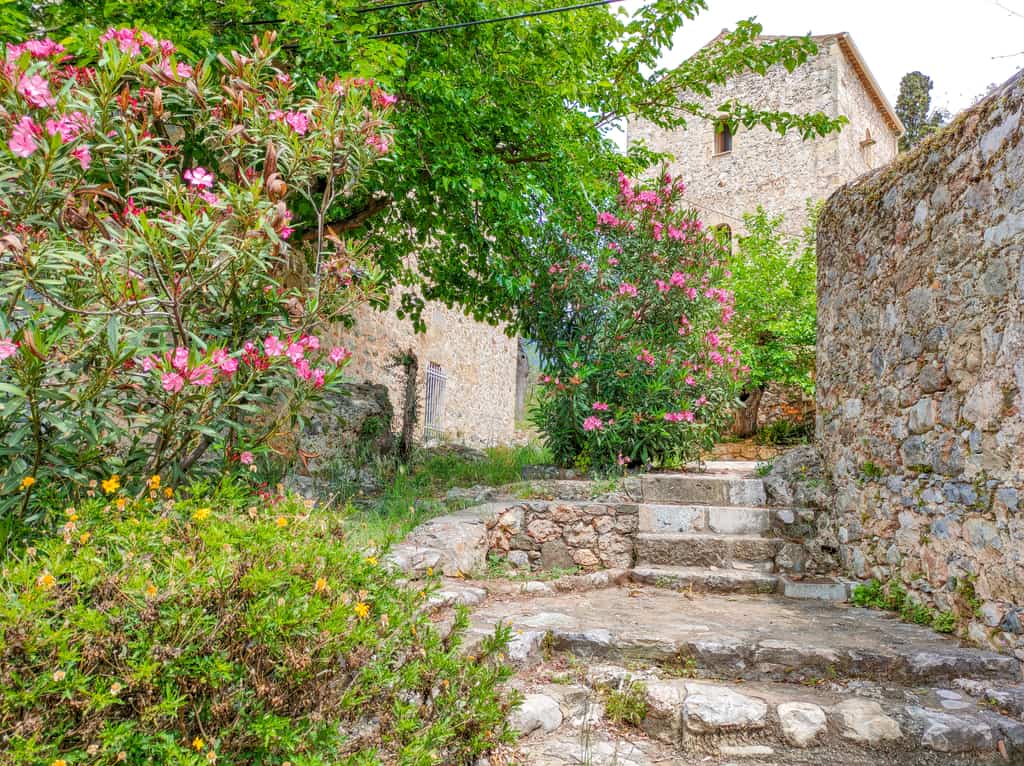
Kardamyli is an adorable small town on Mani Peninsula, which is the middle peninsula in Peloponnese. Its architecture is typical of the Mani: fortified tower-houses (pyrgospita), built mostly in the period 17th to 19th c. to protect the families from pirates and the Ottomans, but mostly to serve as family strongholds during periods of blood feuds. Those tower-houses are reminiscent of the tower-houses in Tuscany, but the vendetta culture on Mani Peninsula was bloodier than the Sicilian one.
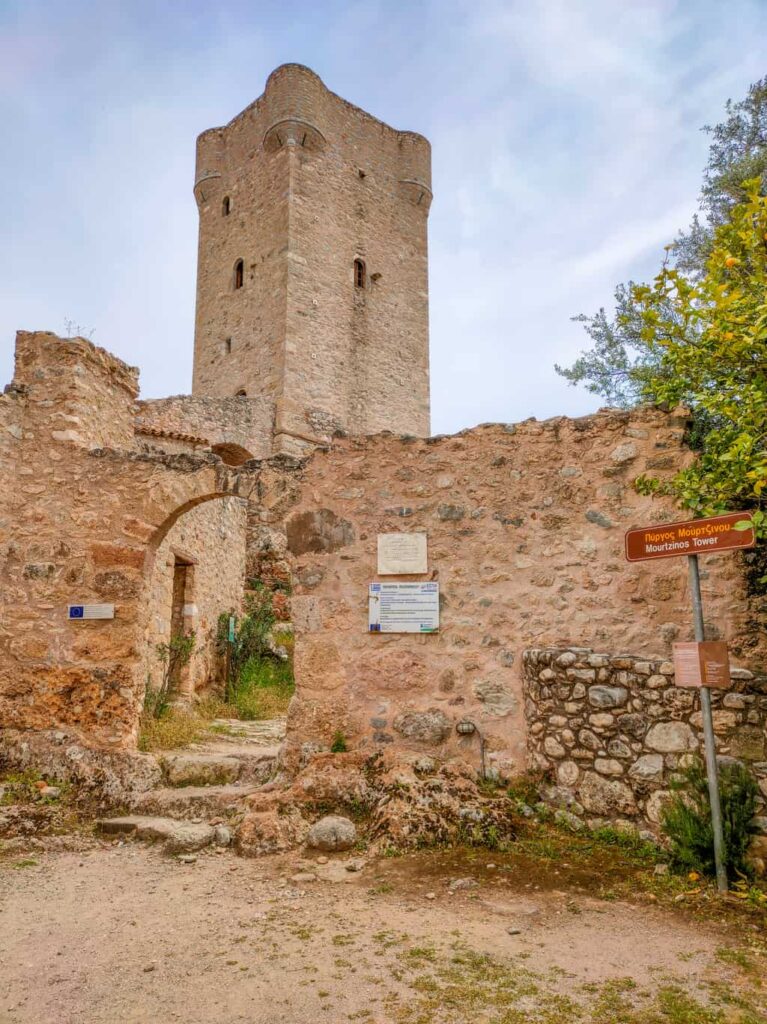
Although the museum was closed on the Tuesday I visited, I could walk around in the old town, called Pano Kardamyli (Upper Kardamyli) and climb the tower in the Troupakis-Mourtzinos complex. A part of this complex is the beautiful 18th-century Church of Agios Spyridon (St. Spyridon), which was the private church of the families who lived there through the centuries.
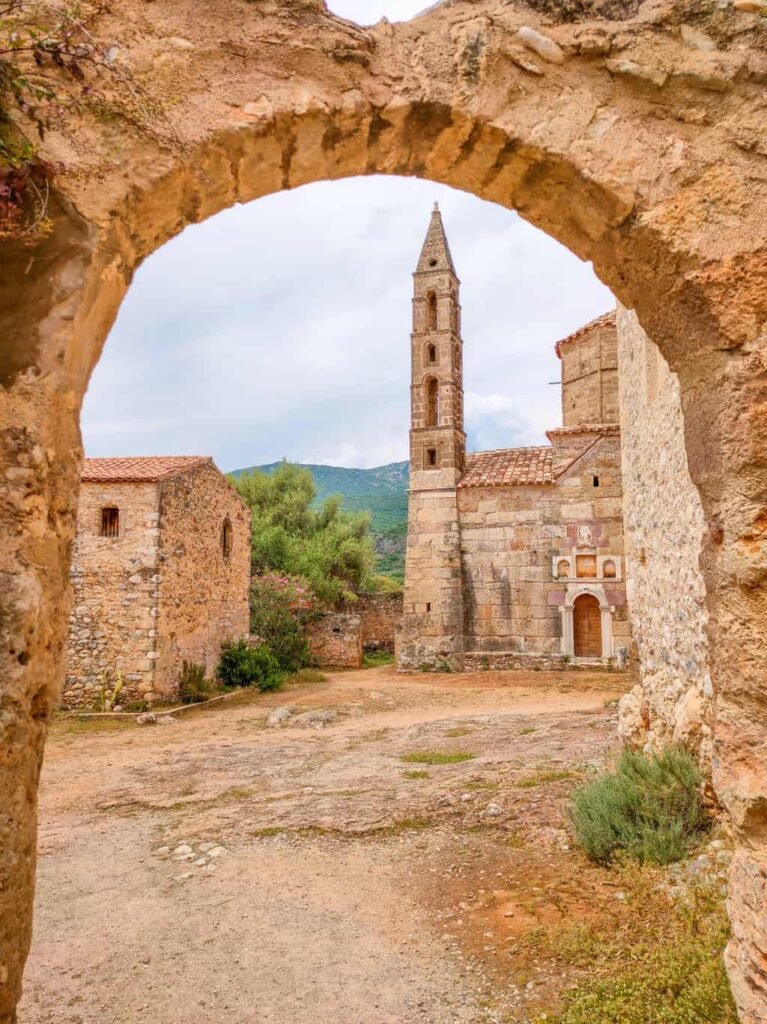
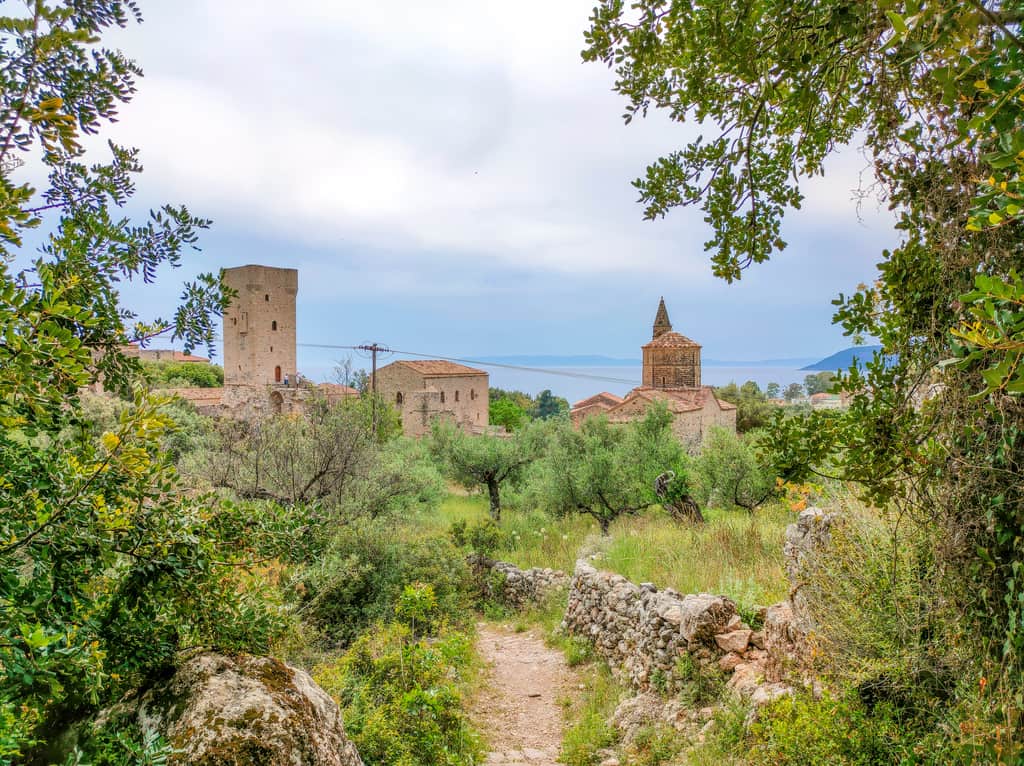
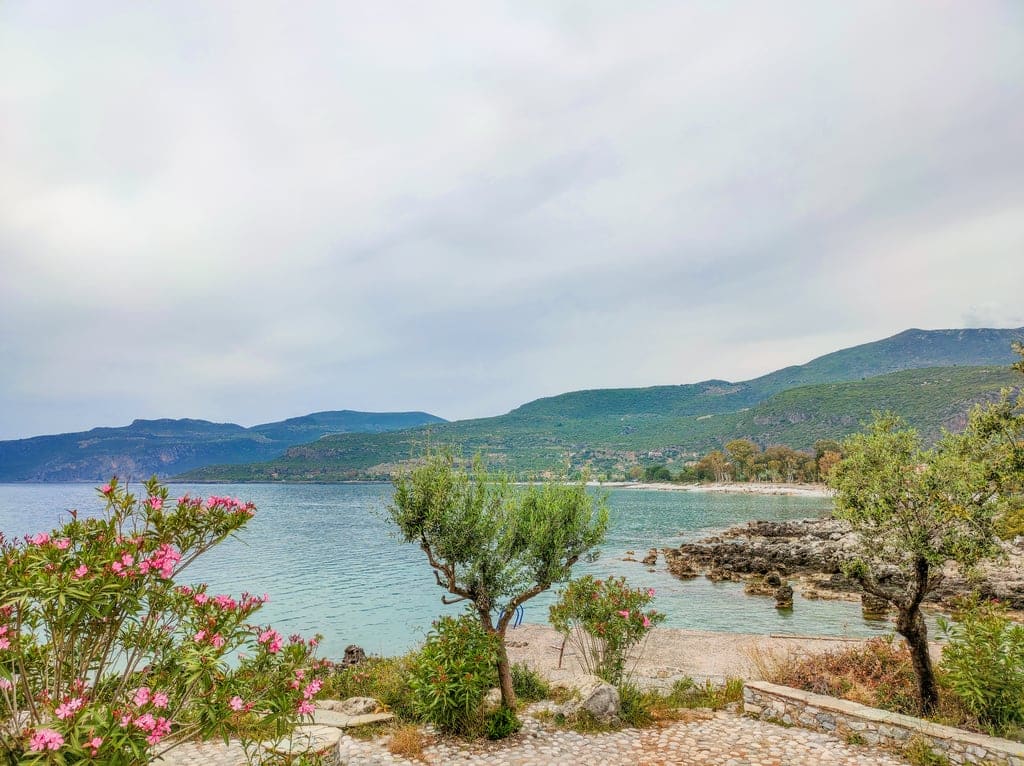
Getting outside of the complex on the northern side, there is trail that leads to the church of Agia Sophia. I took a short walk on it to admire the views of Kardamyli and the Messenian Gulf.
Fun fact: For the movie fans, but maybe you already knew it, Before Midnight with Julie Delpy and Ethan Hawke has a few scenes shot in Kardamyli, as well as at the Kalamata International Airport, and at the Leigh Fermor House, a few kilometers further south of Kardamyli.
Fun fact #2: The famous English writer Sir Patrick Leigh Fermor chose this area as his home. He built his house just a few km down the coast in the hamlet of Kalamitsi, where he lived. Now the house is part of the Benaki Museum and may be visited under special conditions.
If you have more time in Kardamyli, you can walk along the high street with its little shops and stop for a lunch or dinner at one of the taverns overlooking the sea.
As the bus schedule from Kalamata is not really convenient, leaving you only with a half-day trip to Kardamyli, you can spend the morning in Kalamata either sightseeing, visiting one of the museums, or just chilling around with a cup of coffee until it’s time for the bus. Or you might decide to visit some of Kalamata’s many churches: the Church of Agioi Apostoloi, the Metropolitan Church of Ypapanti, or the Kalograion, what I actually did.
Practical information:
- You have to check with the bus driver at exactly what time the bus arrives in Kardamyli on the way back to Kalamata. You can also take the late bus back to Kalamata, which leaves at 20:30 from either Agios Nikolaos or Itilo, depending on the day of the week.
- Make sure you don’t visit on a Tuesday, if you want to see the Museum.
Where to stay in Kalamata?
Most of the hotels in Kalamata are located at a walking distance from the sea, and that’s quite normal as Kalamata is a summer destination. However, if you are visiting only for a long weekend and out of season for the beach, it will make more sense if you stay in the city centre.
If you choose to stay close to the beach, you may need to take the bus to go to the city centre where all the museums are, as it’s a pretty long walk. Still walkable, but you’ll be better with the convenient bus.
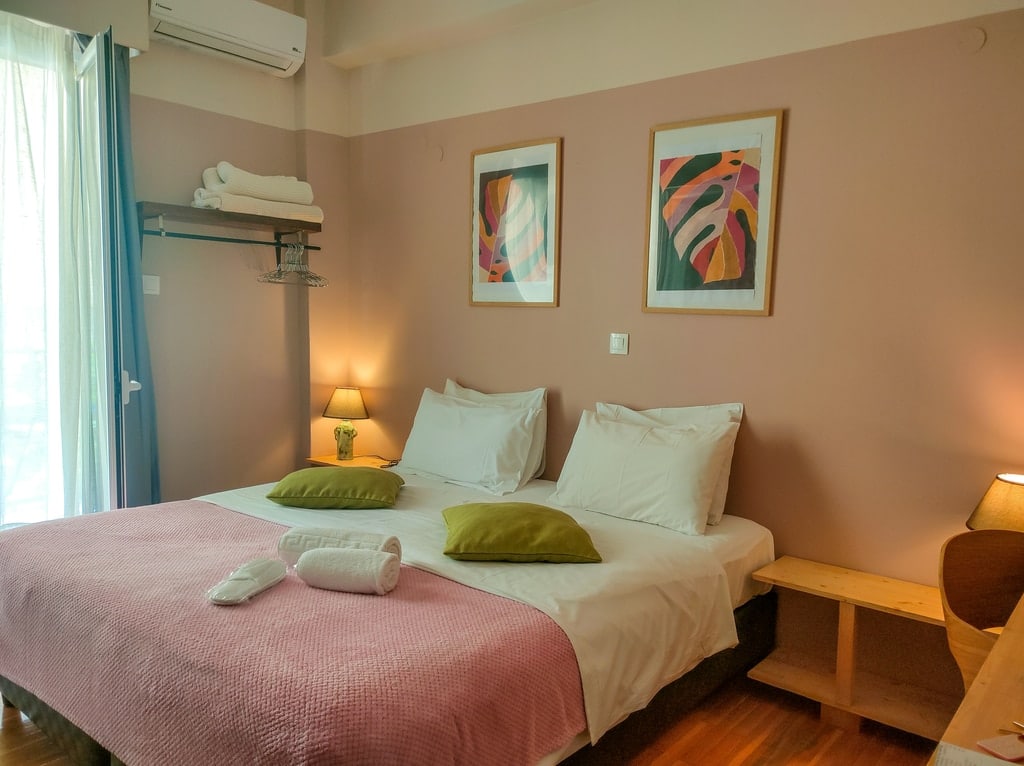
When I visited Kalamata, I stayed straight on the Central Square (Platea) in the city centre at Kalamata Art Hotel. I absolutely loved my experience in this small hotel. The location is perfect. I had the Studio Apartment. The room wasn’t very big but I had a desk, which was quite convenient for me and a small balcony. The glass wall of the bathroom may look a bit weird but I was OK with it as I was travelling solo. If it bothers you, there are curtains in front which you can draw partially or fully.
Read here the reviews about Kalamata Art Hotel on TripAdvisor.
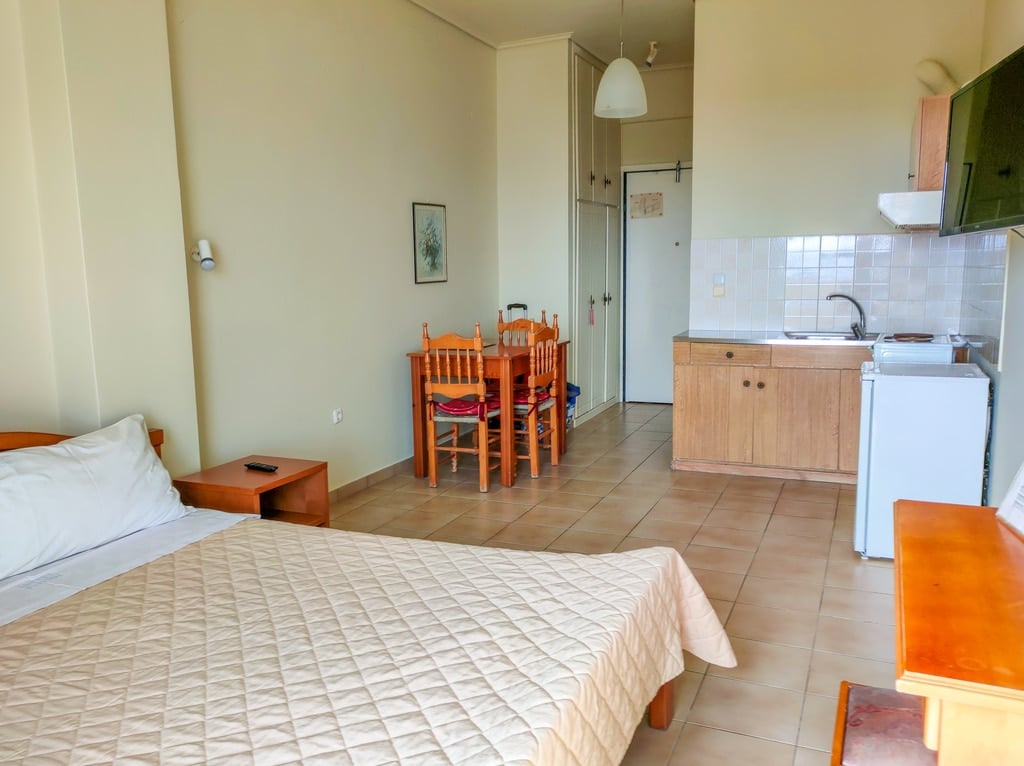
I also stayed for one night at Hotel Fotini, which is very close to the beach. The rooms are very specious there with large balconies and a kitchenette, but the furnishing was a bit shabby and quite outdated. Let’s say that it needs a bit of TLC. On the other hand, it was very cheap and it was clean. The stuff was also very friendly and helpful. Perhaps this hotel is more suited for a beach holiday, as you can walk to the beach and it there’s also a swimming pool. There are 2 bus stops (for both city lines) at a walking distance from this hotel.
Read here the reviews about Hotel Fotini on TripAdvisor.
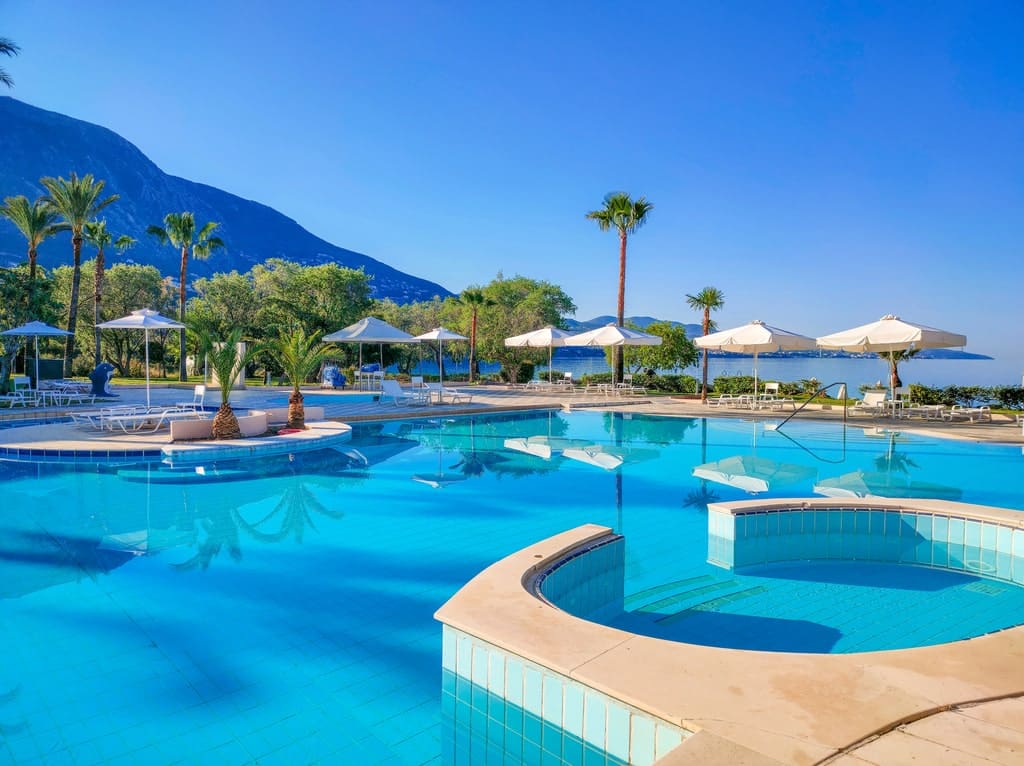
The TBEX Conference was held at Grecotel Filoxenia, and although I didn’t stay at this hotel I could use their facilities. It’s a pretty posh space and if you want a bit of luxury, why not stay there. The city bus stops in front of the hotel. So it is convenient if you want to explore around, but you don’t have a rent car.
Read here the reviews about Grecotel Filoxenia on TripAdvisor.
Otherwise have a look at this map, you can find hotels and accommodation offered by various providers:
