

Abandoned after the Second World War and carefully restored decades later, Holašovice is one of the most remarkable villages in the Czech Republic. The village is famous for its exceptionally preserved South Bohemian Folk Baroque architecture, a distinctive rural style that earned Holašovice recognition as a UNESCO World Heritage Site in 1998. Located in the heart of South Bohemia, it offers a rare glimpse into traditional village life and architectural heritage that has survived for centuries.
If you are travelling through South Bohemia or exploring beyond Prague, Holašovice is an easy and worthwhile stop. Below, you’ll find out what makes this UNESCO village so special, what to look for when visiting, and how to include it in your itinerary.
Read more: My 4-day itinerary in South Bohemia, Czech Republic.
DISCLOSURE: This post contains affiliate links. If you make a purchase via one of those links, I will earn a commission at no extra cost for you.
DISCLAIMER: I visited Holašovice and the villages Plástovice and Malé Chrášťany as a part of a press trip organized by the South Bohemian Tourism Board on invitation by Czech Tourism, where all accommodation, meals and activities were provided by the Tourism Board and their partners. However, all opinions expressed in this post are mine.

Why Is Holašovice a UNESCO World Heritage Site?
Despite its small size – just 23 historic farmsteads arranged around a central village green – Holašovice is internationally recognised for its exceptional preservation. In 1998, the village was inscribed on the UNESCO World Heritage Site list for its outstanding example of 19th-century South Bohemian Folk Baroque architecture. The façades, barns and gates surrounding the square form one of the most complete and authentic rural ensembles of this style in the Czech Republic.
What makes Holašovice remarkable is not just a single building, but the intact layout of the entire village. Unlike many historic settlements that were modernised or rebuilt, Holašovice retains its traditional structure and decorative façades, offering a rare glimpse into rural life in South Bohemia during the 1800s.

Read more: If you’re interested in exploring more heritage sites across the country, you can also read my guide to UNESCO sites in the Czech Republic outside Prague.
What Is South Bohemian Folk Baroque Architecture?
Folk Baroque or Rural Baroque is an architectural style typical for the villages in Central Europe, and specifically in South Bohemia, which you won’t find anywhere else. It emerged in the 1820s and reached its height in the 1860s when the rural areas of Central Europe were thriving.

The farmers were tearing down their wooden houses and barns and building more stable brick ones. The gables of the houses are beautifully decorated with volutes and other stylized ornaments depicting the owner’s initials or profession.

The History of Holašovice: From Deserted Village to UNESCO Status
For the first time the name of Holašovice was mentioned in the 13th century. The 16th century brought no good to the small village, when only 2 people from the Czech-speaking population survived the plague of 1520. In the centuries thereafter, the village started to revive and was settled again by Bavarians and Austrians. In the aftermath of Second World War, as all Germans were expelled from Czechoslovakia with a decree of the communist government, the place was deserted.

After being a ghost village for almost a half century, in the 1990s the village was restored and repopulated again. Although there’s a dark side attached to the history of Holašovice, it helped the place to survive the communist regime without being destroyed and turned into a model co-operative socialist village, or whatever they might have come up with.

Things to Do in Holašovice
When you arrive in Holašovice, I strongly recommend visiting the Tourist Information Centre. There’s a small ethnographic exhibition there and old pictures of how the place looked like before the restoration.

There’s also a miniature model of the village, which will give you an idea of how big actually the farmsteads are. From the street we can only see the beautiful ornamented facades, but behind them there are barns and sheds and residential parts. All farmsteads are connected with each other on the street side with walls and gated entrances and are facing the village green.

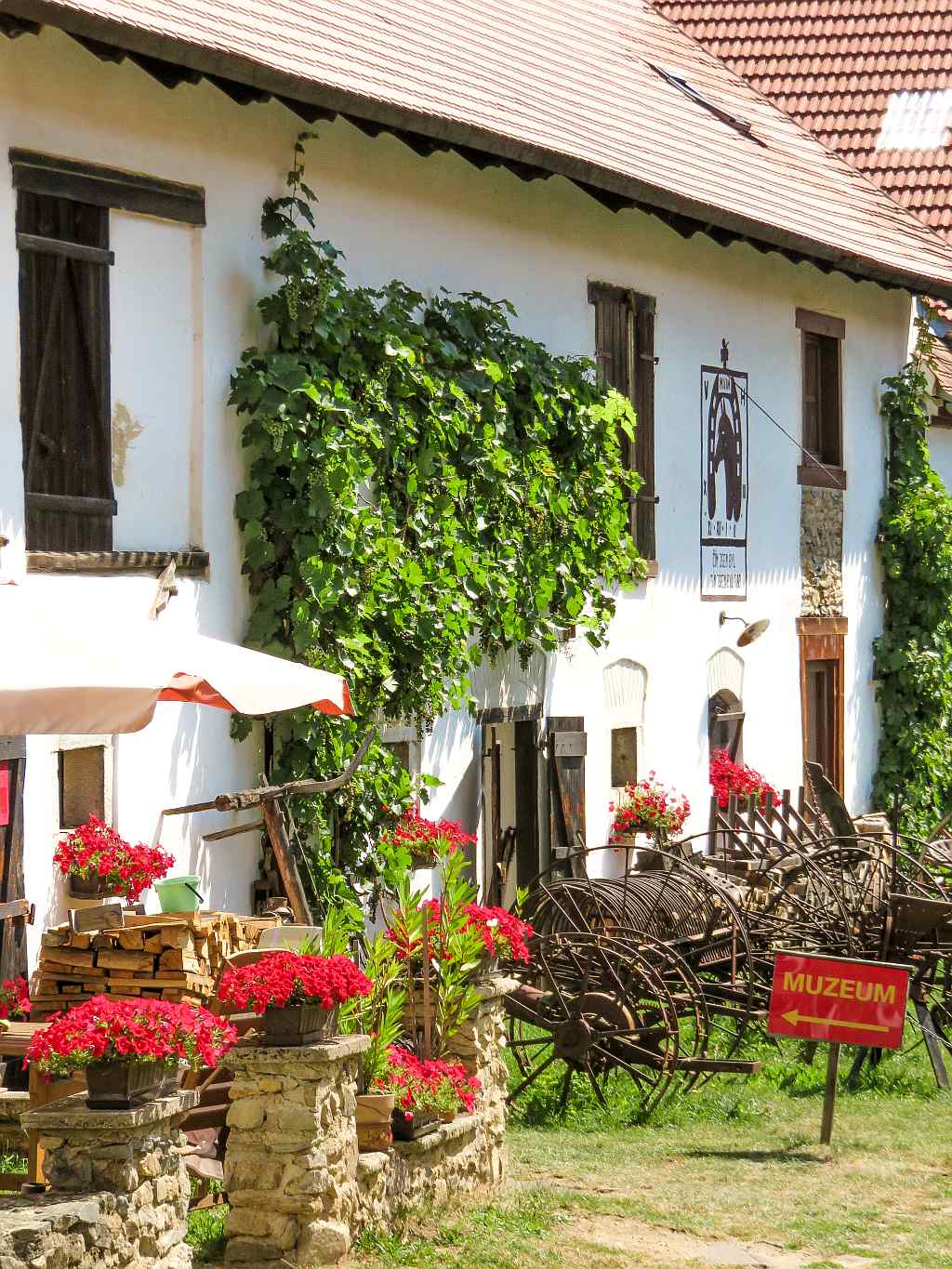
There’s a small chapel and a pond. Unfortunately, you can’t visit the farmsteads, as there are people living there. However, one of the farmsteads is turned into a museum (Selský dvůr at No. 6), which is open for public.
There isn’t much to do in the village, so I would I recommend planning about 2 hours for your visit, unless you decide to grab a bite at one of the two restaurants in Holašovice – Jihočeská hospoda at No. 18 (low season open only for dinner) or Špejchar u Vojty at No. 19.
How to Get to Holašovice
You can easily get to Holašovice from České Budějovice. There’s a direct bus line from the main bus station in České Budějovice. It takes about half an hour. Check here for the bus schedule. As a destination type in Holašovice/Jankov.

If you are travelling around by car in South Bohemia, Holašovice is only 17 km from České Budějovice, so you have to include it on your itinerary.
Tip: If you decide to stay in České Budějovice, you might find my travel guide to České Budějovice quite useful.
You can also visit Holašovice on a day tour from Prague. The tour includes both Český Krumlov and Holašovice and it’s a great and easy way to have a glimpse of South Bohemia.
Are There Other Folk Baroque Villages in South Bohemia?
Holašovice is not the only village in South Bohemia where you can admire Folk Baroque architecture. There’s a whole lot of them, but Holašovice is the best preserved one.

When we were travelling around in South Bohemia, we stopped also in Plástovice and Malé Chrášťany. Two absolutely adorable places, without the glossiness of being UNESCO heritage sites, a bit weathered, but so real. And that’s not all.
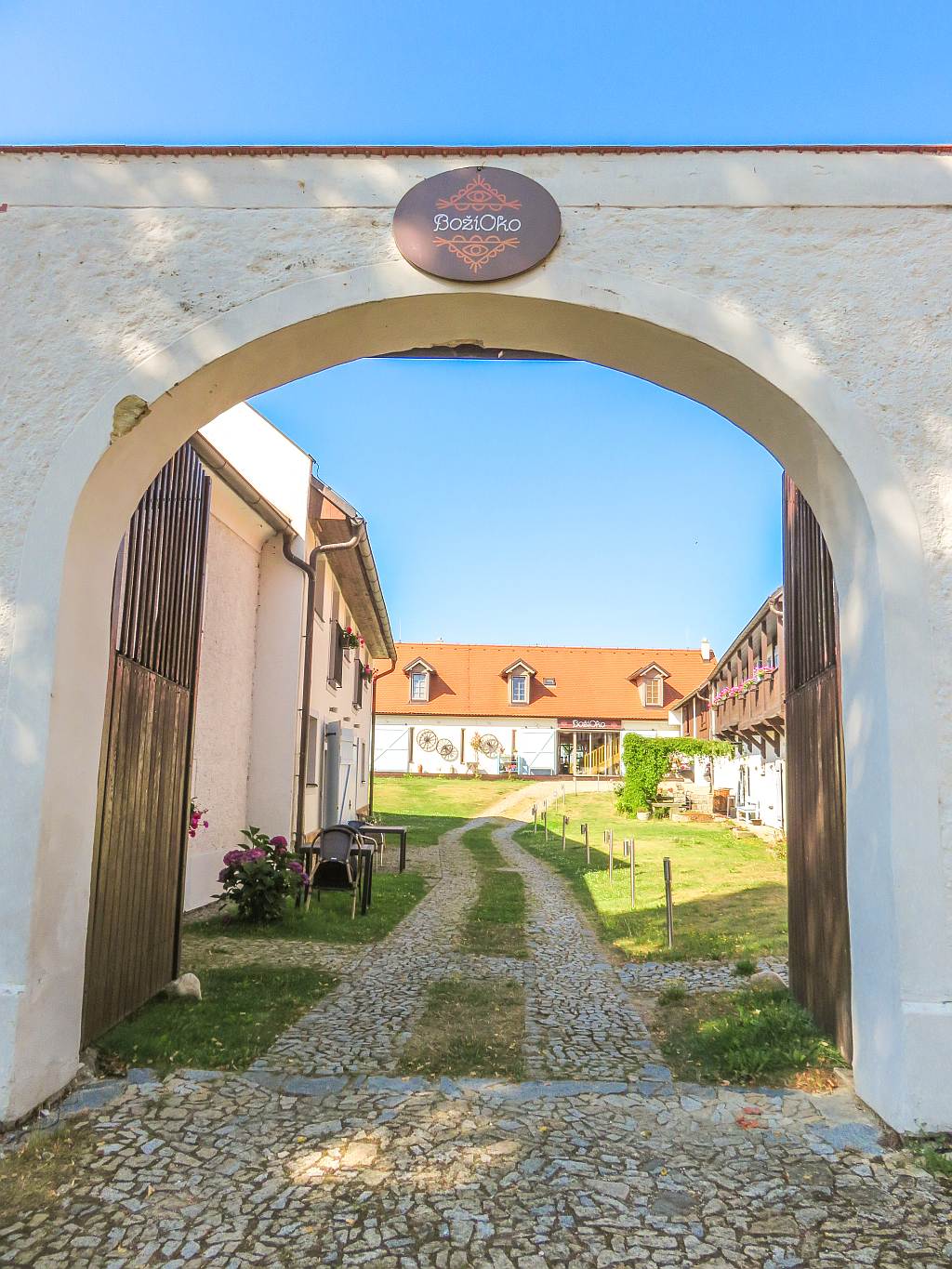
There are a few more villages in the so-called PodKlety region where the typical South Bohemian Folk Baroque is preserved – Vodice, Záboří, Břehov, Čertyně, Dobčice, Krnín, Lipanovice, Mahouš, Rojšín, Třešňový Újezdec, Vitějovice, Zbudov, Zvěřetice.
Isn’t that a great idea for a road trip?
Where to Stay Near Holašovice
Although Holašovice is a small village, it is still possible to stay overnight here if you’d like to experience the quiet atmosphere after day visitors leave. One option is Špejchar u Vojty, a traditional restaurant with a small pension offering simple rooms right in the village. Another accommodation option is Apartmán Dolánek, which provides a more private apartment-style stay.
Have you already visited Holašovice? What do you think about it? Share your experience below in the comments! Questions? No, worries. Ask them and I will try to help you.

Holašovice looks like a true gem in the Czech Republic. I admit I didn’t know about it when I visited the country – but it’s a reason to go back and discover it. Love the architecture!