
Not many places around the world can boast as an all-year-round tourist destination, but little Bansko in Bulgaria can. Snuggled in the foot of the Pirin mountain, this Bulgarian town is equally attractive in both winter and summer. If you happen to visit off-season, as I did, there is still plenty to do and see in Bansko.
The first time I arrived in Bansko it was raining. I was carrying a 20 kg pink backpack I have borrowed from a friend and I was going on my very first hiking trip with a friend of mine. It was 1994. We were going to start in Bansko and end up in Melnik. Although we were rain-drenched, me more than him as I had terrible equipment and no weather-proof clothes (it was ’94 after all and these things were hard to get in Bulgaria), I was still enjoying walking down the cobbled streets and soaking up the quaint atmosphere of the place and… the rain. It was quiet and a bit sleepy.
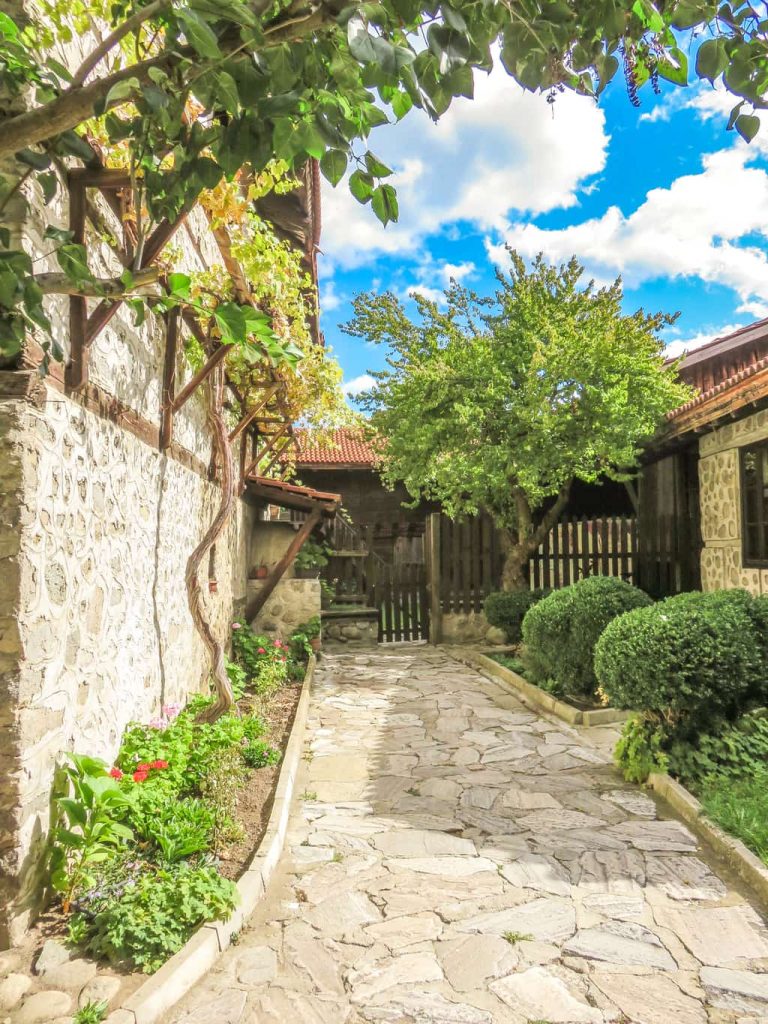
I returned 25 years later to find Bansko changed. Although the town carried the scars of the wild development of mass tourism in the ’90 and the ’00: abandoned building sites and deserted hotels, I was happy to see that Bansko hasn’t lost its soul and the free spirit. It was a lovely place to visit and enjoy the unique architecture, great food and the beautiful mountains.
DISCLOSURE: This post contains affiliate links. If you make a purchase via one of those links, I will earn a commission at no extra cost for you.

How to get to Bansko
The nearest airport to Bansko is in Sofia. You can fly there with Bulgaria Air or one of the low-cost European airlines like Ryanair and Wizzair. Ryanair has also seasonal flights to Plovdiv. Alternatively, you can fly to Thessaloniki in Greece.
Here are some distances to Bansko from other places:
- Sofia – Bansko: 155 km / 2 hrs
- Plovdiv – Bansko: 160 km / 2 hrs 30 min
- Thessaloniki (Greece) – Bansko: 217 km / 2 hrs 45 min
- Skopje (North Macedonia) – Bansko: 240 km /3 hrs 30 min
How to get from Sofia to Bansko
If you are travelling by car, rented or your own, just head south to Greece via A3 and then via route 19 to Razlog and Bansko. It takes about 2 hrs by car from Sofia. Until Blagoevgrad you’ll be driving along the highway A3, so the road is fine. As A3 is being built at the moment, be prepared for some construction works along the way. The last 50 km will be on a regional road, which is in a good condition.
Getting from Sofia to Bansko by bus
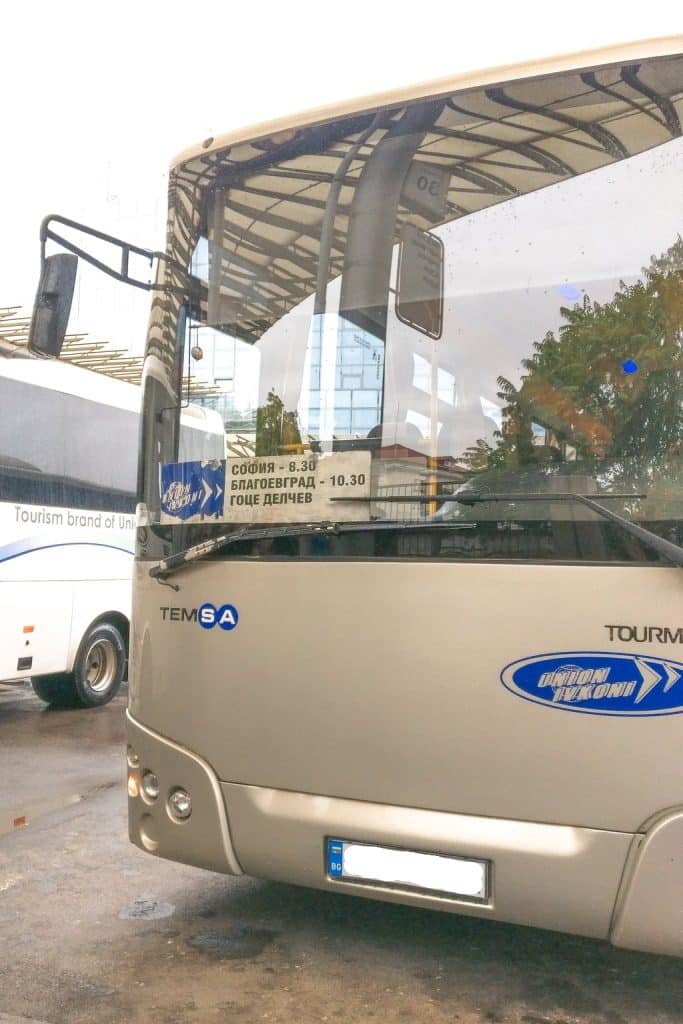
It’s quite easy to travel from Sofia to Bansko by bus. There are 2 bus stations in Sofia from where you can catch the bus to Bansko. I’ve used both of them as they have different schedules.
From the Central Bus Station there are 2 companies that operate the line Sofia – G. Delchev, one departs at 14:00 and the other one at 16:45.
If you want to travel early in the morning, for example if you are visiting Bansko on a day trip, then you have to take the bus from Bus Station West (Ovcha Kupel Bus Station). The first bus leaves at 7:00 and the last one at 16:30. There are about 10 buses per day.
The average price of a one-way ticket is 7-8 EUR (15-16 lev).
Getting from Sofia to Bansko by train
Although this is still possible, I am not recommending travelling by train from Sofia to Bansko, as it takes forever and trains in Bulgaria aren’t the most comfortable ones. The trip is about 7 hours and you need to change trains in Septemvri.

Things to do in Bansko in summer
Winter is considered the high season in Bansko, as the place is a popular ski resort, but the beautiful mountain and the cute town attract lots of tourists in the summer, as well.
Tip: I can highly recommend that you take a walking tour in the Old Town if you are visiting Bansko only for a day. Thus you’ll maximize on your time and you’ll be sure you won’t miss a must-visit site.
Stroll the streets of Bansko Old Town
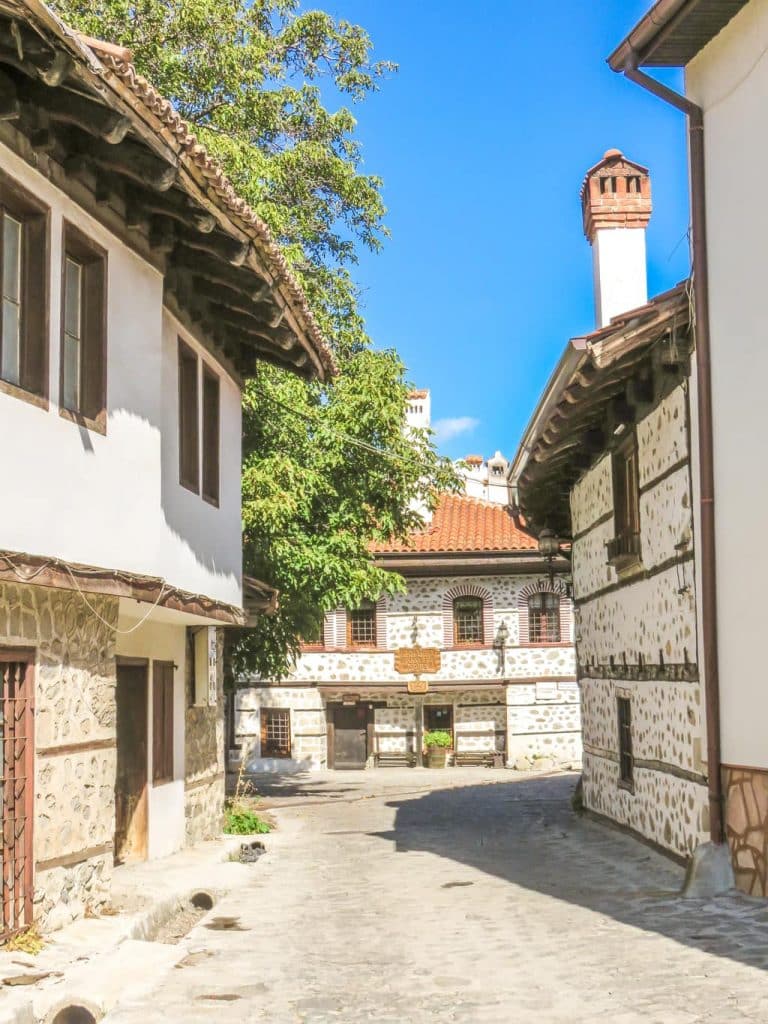
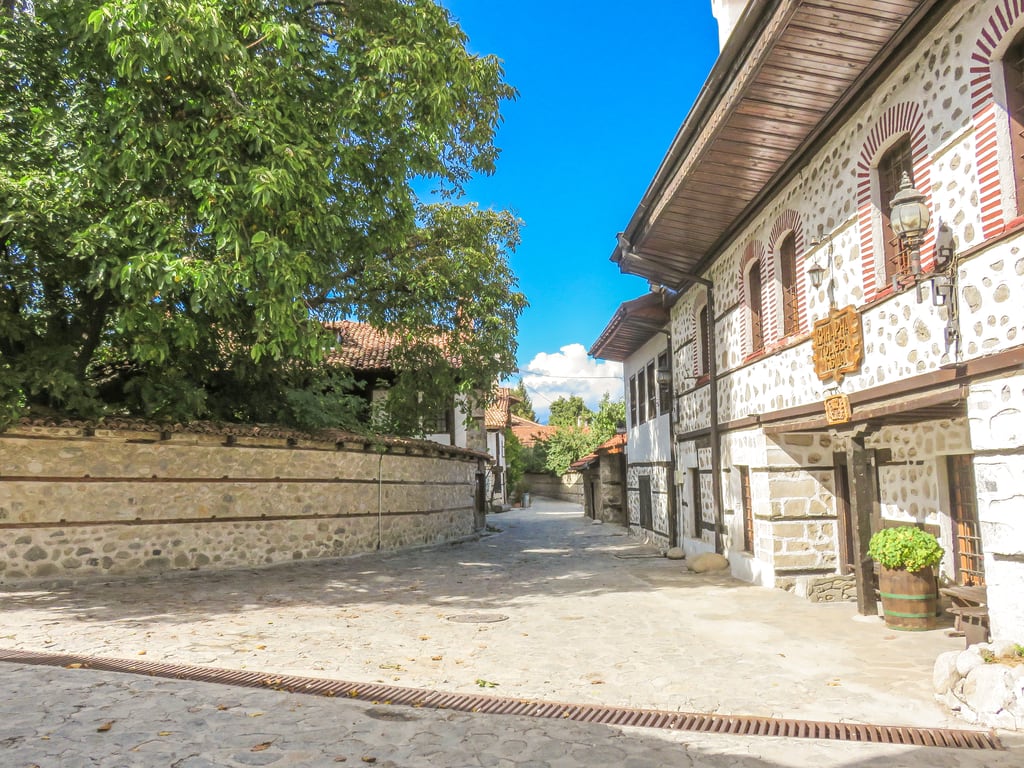
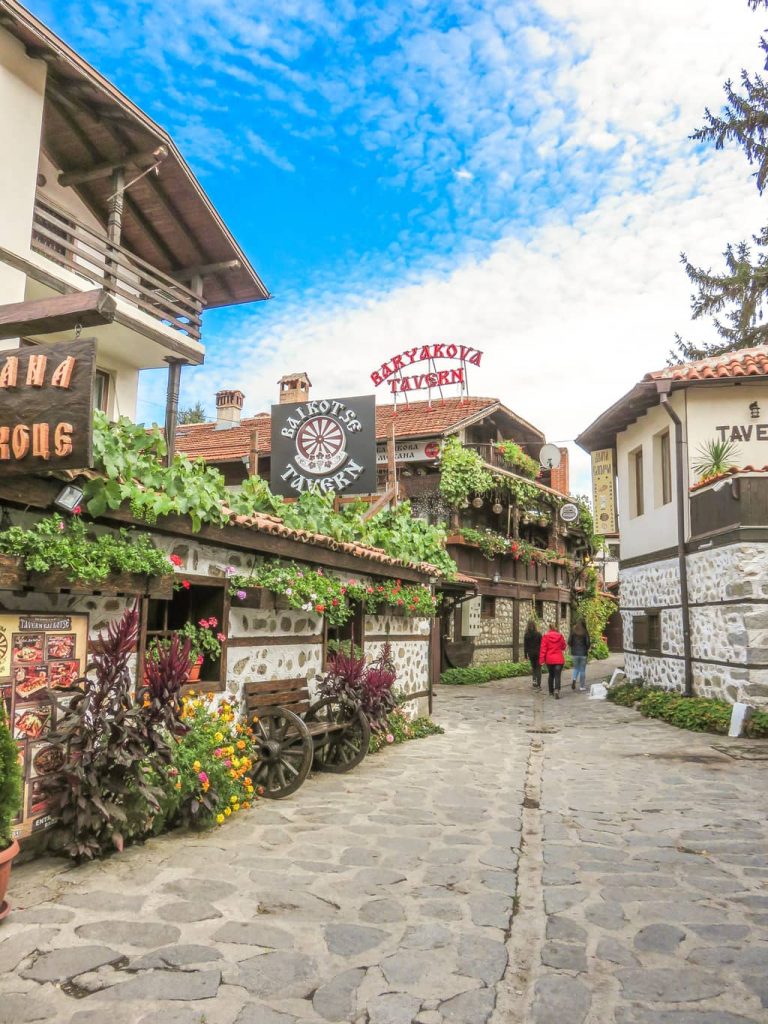
Bansko Old Town is pretty compact and nicely restored in the spirit of the National Revival (1762-1878). Wandering the cobblestone streets you’ll discover tiny alleys, will pass along walled yards, lively restaurants in traditional style, local shops and sleepy kittens.
Admire the typical architecture
Bansko is famous for its typical fortified houses: imposing two-storey stone buildings with inner yards, completely surrounded by 3 meter high stone walls with towers, embrasures and even casemates. The houses of Bansko look like little forts. They had escape routes and secret rooms to hide in case of an emergency. They were built in the 18th – 19th c. when the town was prospering and its citizens needed to defend their property from bandits and thieves.
The architecture of Bansko is pretty unique for Bulgaria and can be seen only in Arbanasi, near Veliko Tarnovo.
Visit the colorful Velyan’s House
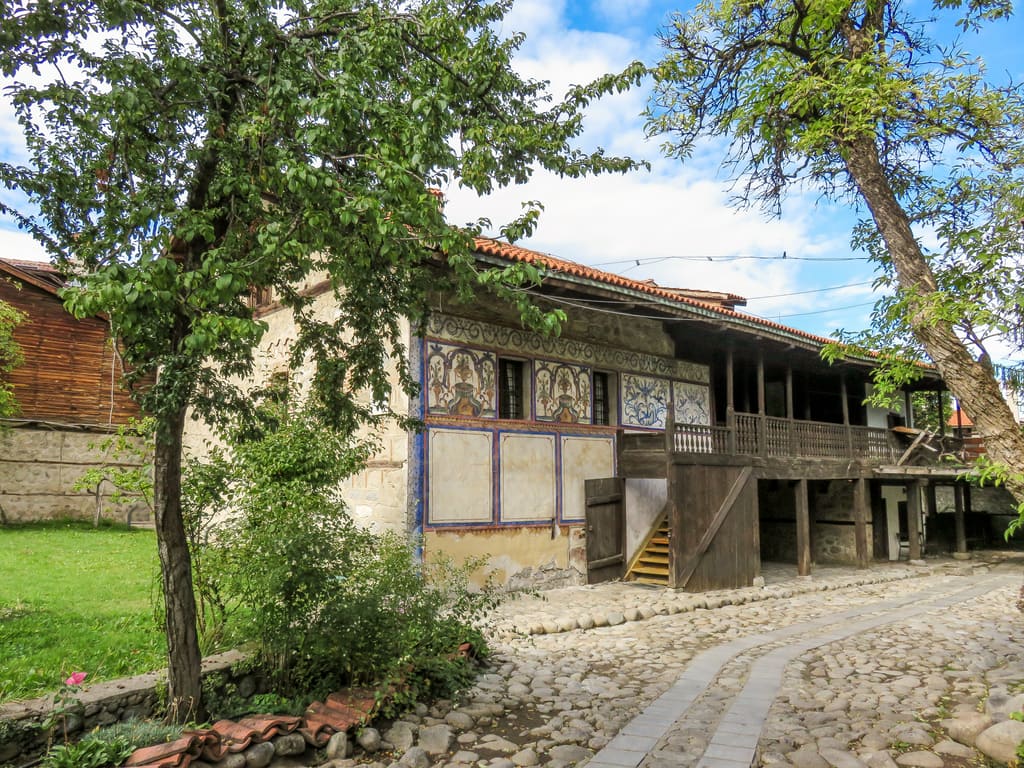
One of the loveliest places to visit in Bansko is Velyan’s House. It is a richly decorated house in the style of the fortified houses. The beautiful frescoes are made by the owner Velyan, who was a famous 19th-century icon-painter and decorator. He was commissioned to paint the Holy Trinity Church and was given in return the house, which became his masterpiece.

Some of the wall frescoes remind of Venice and Istanbul, but we don’t know whether he had actually been there, or these are just creations of his imagination. Well, it doesn’t really matter as the result is stunning. I highly recommend that you take the guided tour. Thus you can hear all the stories and legends connected with the house and its owner.
Practical info:
Address: Velyan Ognev Street 5
Opening hours: Tuesday – Saturday, 9 – 1 pm and 2 – 5:30 pm
Admission: 3 lev (1,5 EUR); guided tour in English 10 lev (5 EUR)
Take a lesson in history in one of the local museums
The museums in Bansko are perhaps more important for the Bulgarian visitor than for the foreign traveller, but they are a good place to take a lesson (or two) in history.

Birthplace Museum of Neofit Rilski
Neofit Rilski (Neophyte of Rila), one of the most important figures of the Bulgarian National Revival, was born in Bansko. He wrote the first Bulgarian Grammar (1835) which together with his other books laid the foundations of the modern Bulgarian language.
Practical info:
Address: Pirin Street 7
Opening hours: daily, 9 – 12 am and 1 – 5:30 pm; closed on Tuesdays
Admission: 3 lev (1,5 EUR); guided tour in English 10 lev (5 EUR)
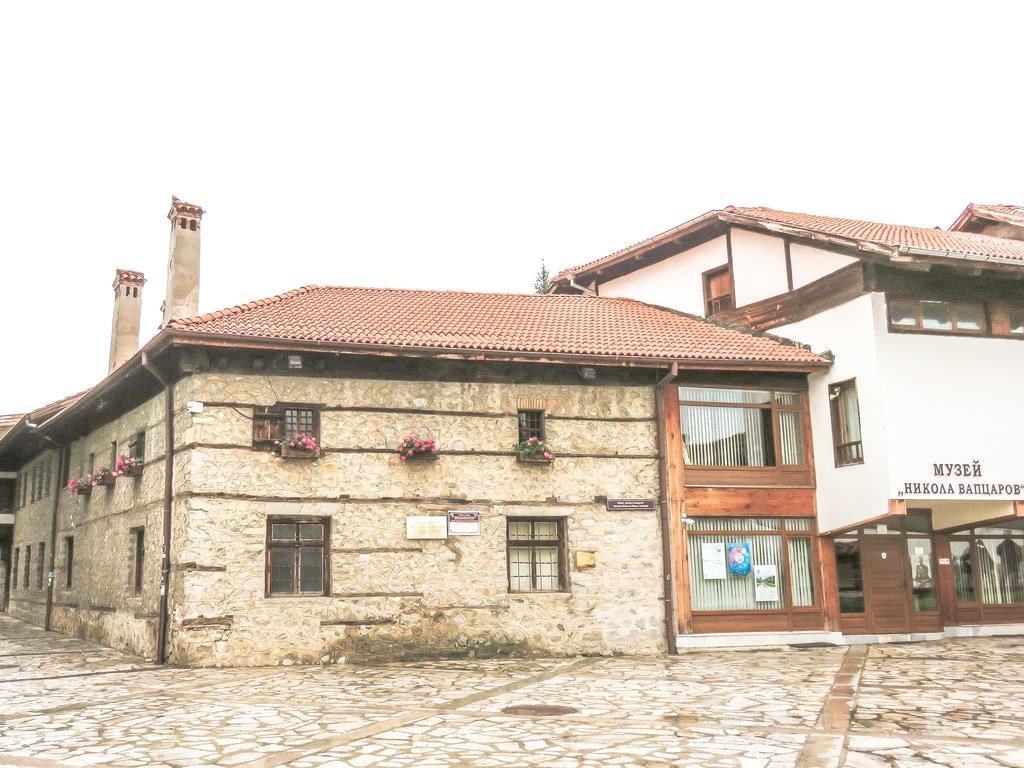
Birthplace Museum of Nikola Vaptsarov
Nikola Vaptsarov is a famous poet and revolutionary and an avid communist. He was arrested in 1942 for supplying guns to the communist resistance and executed the very same day. He’s written some very beautiful verses, like his last poem dedicated to his wife. I found it in two translations, but the Bulgarian variant is still more powerful.
Sometimes I’ll come when you’re asleep,
An unexpected visitor.
Don’t leave me outside in the street,
Don’t bar the door!

I’ll enter quietly, softly sit
And gaze upon you in the dark.
Then, when my eyes have gazed their fill,
I’ll kiss you and depart.

Translated by Peter Tempest
Sometime I’ll come into your dreams
Like an unexpected, unwanted guest.
Don’t leave me outside on the street –
Don’t bolt the doors against me.

I’ll enter on tip-toe. I’ll approach so gently
I’ll narrow my eyes to see you in the dark
And when gorged with gazing at you –
I’ll kiss you and then be gone.

Translated by Christopher Buxton
Practical info:
Address: Pirin Street 7
Opening hours: daily, 9 – 12 am and 1 – 5:30 pm; closed on Tuesdays
Admission: 3 lev (1,5 EUR); guided tour in English 10 lev (5 EUR)

Paisii Hilendarski Memorial and Monument
Another important figure of the Bulgarian National Revival is also born in Bansko – the forefather of modern Bulgaria – Saint Paisius of Hilendar or Paisii Hilendarski. His book Istoriya Slavyanobolgarskaya (Slavonic-Bulgarian History) (1762) played a major role in the formation of the Bulgarian national consciousness. 1762 is also considered the beginning of the Bulgarian National Revival period, which lasted until 1878, when Bulgaria was liberated from the Ottoman Empire.
Practical info:
Address: Otets Paisii Street 21
Opening hours: Tuesday – Saturday, 9 am – 1 pm and 2 – 5:30 pm
Admission: 3 lev (1,5 EUR); guided tour in English 10 lev (5 EUR)
Visit the iconic Holy Trinity Church
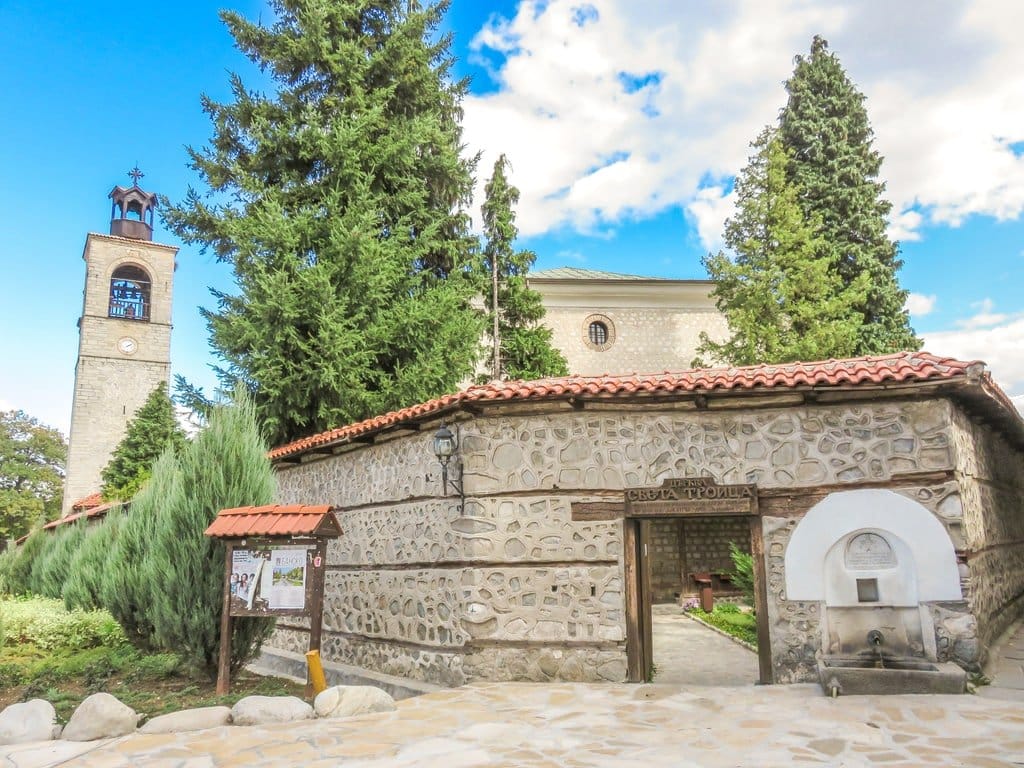
The richly decorated Holy Trinity Church is the symbol of Bansko. It used to be the biggest church on the Balkan Peninsula before they built Alexander Nevski Cathedral in Sofia. From outside the church looks pretty small, but in fact it’s enormous. It was built in the period 1833-1835 with crowdsourcing from the locals. The clock tower, however was built later, in 1850.
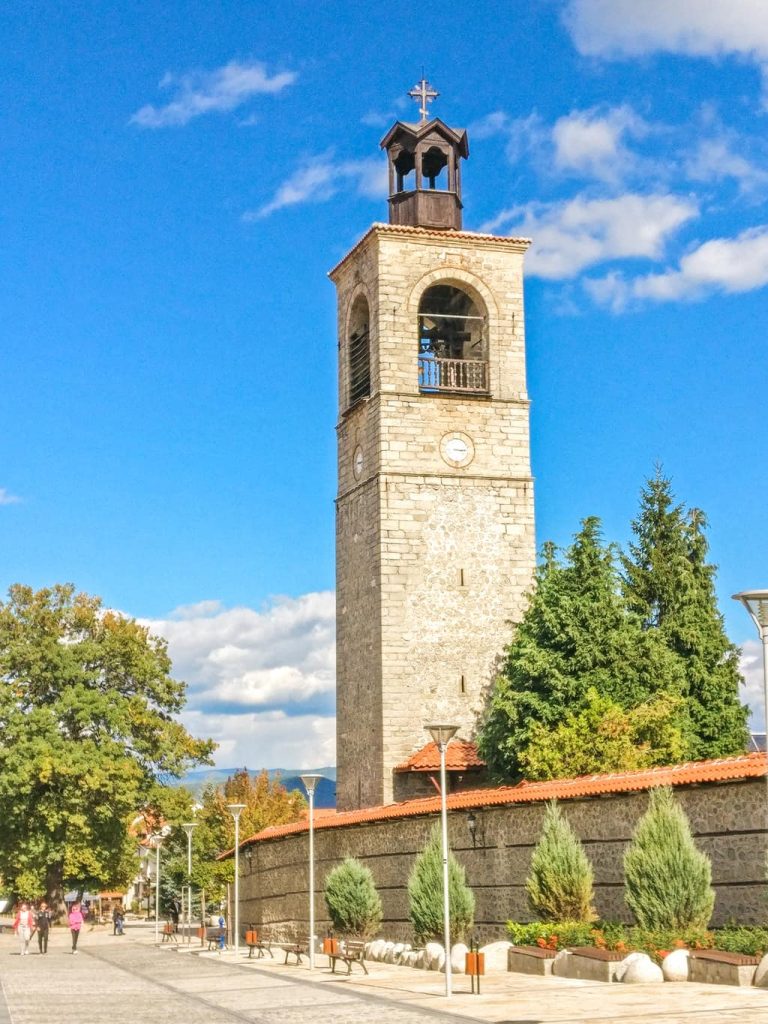
One interesting thing about the church is the Christian cross and the Ottoman crescent which you can see above the entrance of the church. They symbolize the religious tolerance. This might not be a big deal today, but you have to think like early 19th century when Bulgaria was still under the Ottoman rule and religion played immense role in the society, this was a pretty bold statement.
Fun fact:
The name of the church is sometimes incorrectly translated as Saint Trinity. This is how you’ll find it in most travel guides. In Bulgarian the church is called “Света Тройца“, and “свети/света” means both ‘saint’ and ‘holy’ in Bulgarian. This is how the incorrect translation has appeared.
Go hiking in Pirin National Park
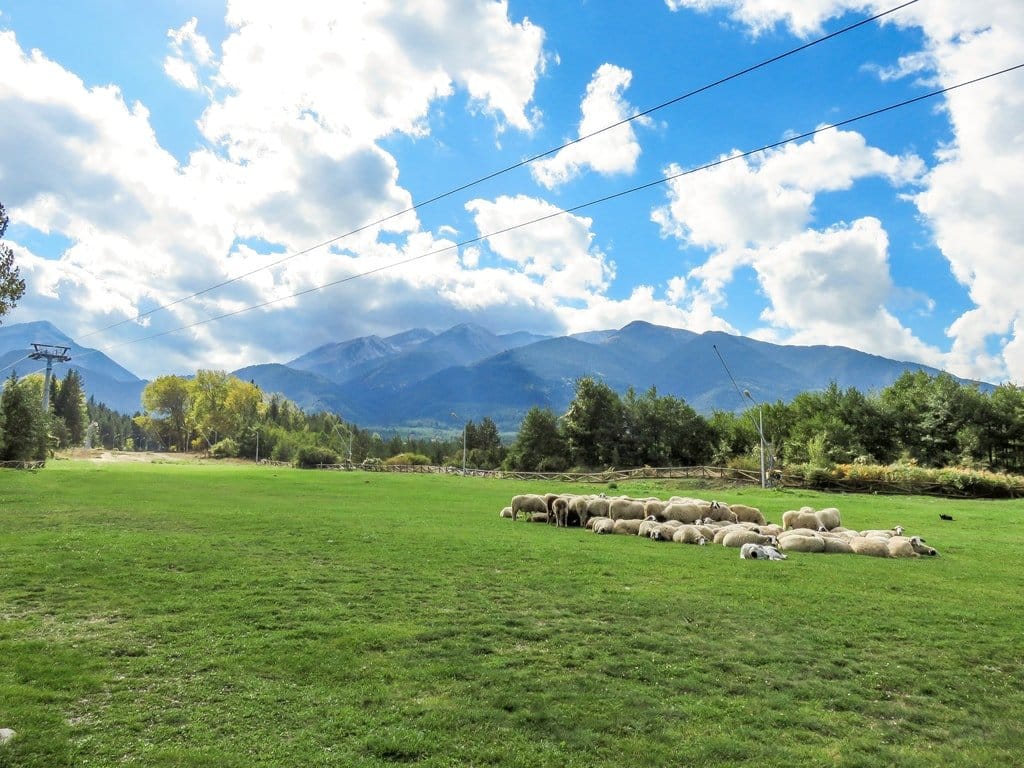
Bansko in summer is a paradise for hiking and trekking lovers. Located at the foot of the Pirin mountain and at the doorstep of Pirin National Park, the city can be used as a base for day hikes or as a starting point of multi-day trekking adventures. Pirin National Park is also a UNESCO World Heritage Site.
The walking trails around Bansko are with different levels. There are beginner’s trails and there are also some quite strenuous ones, like climbing mount Vihren (2914 m) or Todorka peaks (2746 m).

You can also stop by at the Pirin National Park Visitor Centre, which is a short walk from the Old Town. There you can learn everything about the National Park and its biodiversity, as well as get some practical information about hiking in the park.
Practical info:
Address: Pirin Street 104
Opening hours: winter: 9 am – 5 pm; summer: 9 am – 5:30 pm
Admission: free

See the oldest pine tree in Bulgaria
The oldest pine tree in Bulgaria is just an easy day trip from Bansko. It’s more than 1300 years old! It’s actually as old as the country itself, as Bulgaria was founded in 681. It has been discovered in 1897 by the forest ranger Baikushev and it’s named after him: Baikushev’s Pine or Baikushev’s Fir, in Bulgarian Байкушева мура. It’s from the species Bosnian pine (Pinus heldreichii). The tree is almost 30 m high and has a circumference of 7.6 m.
How to get there:
The famous tree is a short walk (300 m) from Banderitsa hut (Хижа Бъндерица). You can get to the hut by car/bus (about 30 minutes) or take the walking trail (13 km / about 4 hrs).

Take the Gondola lift
If you are visiting Bansko on a day trip and still want to see a bit of National Park Pirin, you can take the Gondola lift to Banderishka Polyana (Бандеришка поляна) and have a short walk there. In the winter the Gondola lift is a part of the skiing facilities and in the summer it’s just a nice way to see the mountains without hiking.
The Gondola lift is an 8-seater cabin lift and is the second longest in Bulgaria with its 6233 m. It takes 25 minutes to reach the Bandersihka Polyana station from Bansko. The elevation gain covered by the lift is 597 m.
Practical info:
Working hours: in the summer season (01 July – 6 September) – daily, from 8 am till 4 pm continuous working; in off-season (May, June, September, October, November) – Monday-Friday, at 8 am – one-way to Banderishka Polyana and at 4:30 pm – one-way to Bansko.
Prices: one-way ticket adults – 22 lev (11 EUR), kids (7-12 yof) – 13 lev (6,50 EUR); return ticket adults – 26 lev (13 EUR), kids (7-12 yof) – 17 lev (8,50 EUR).
Websites: prices of the lift; schedule of the lift
Climb the Razlog Viewing Tower
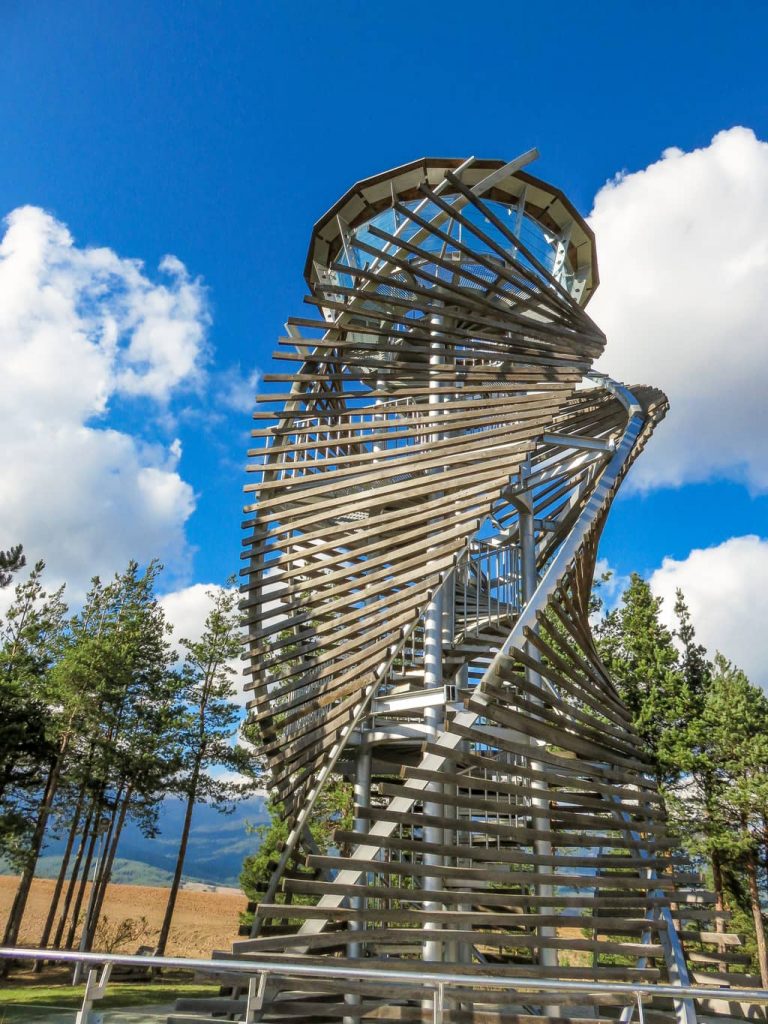
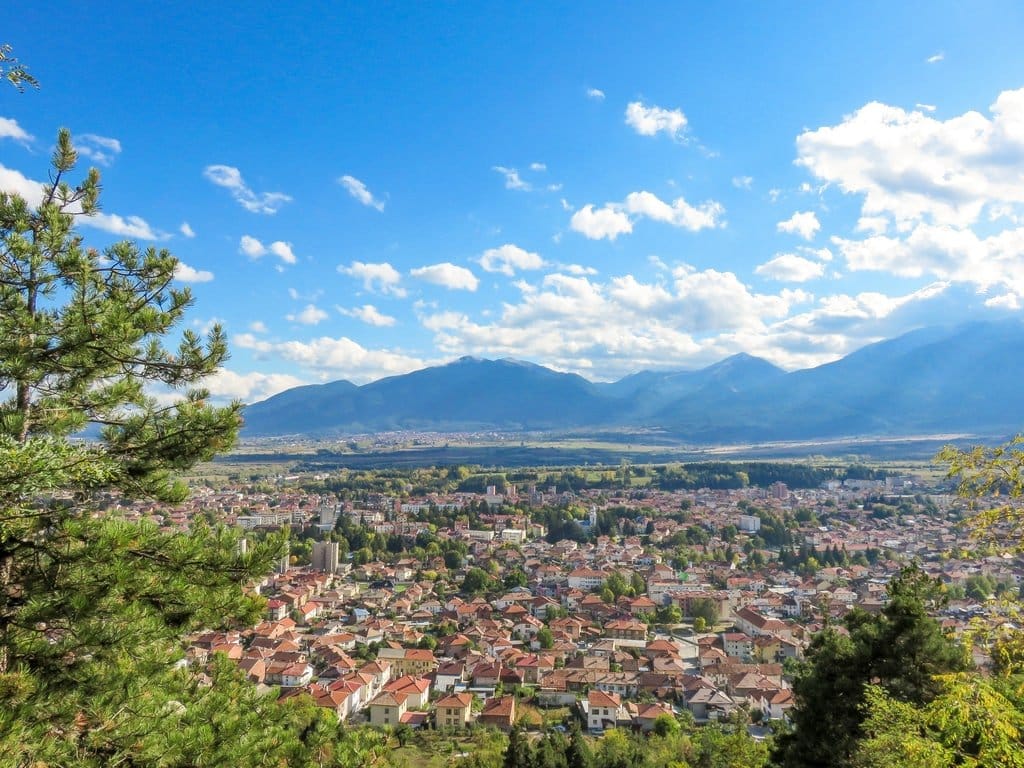
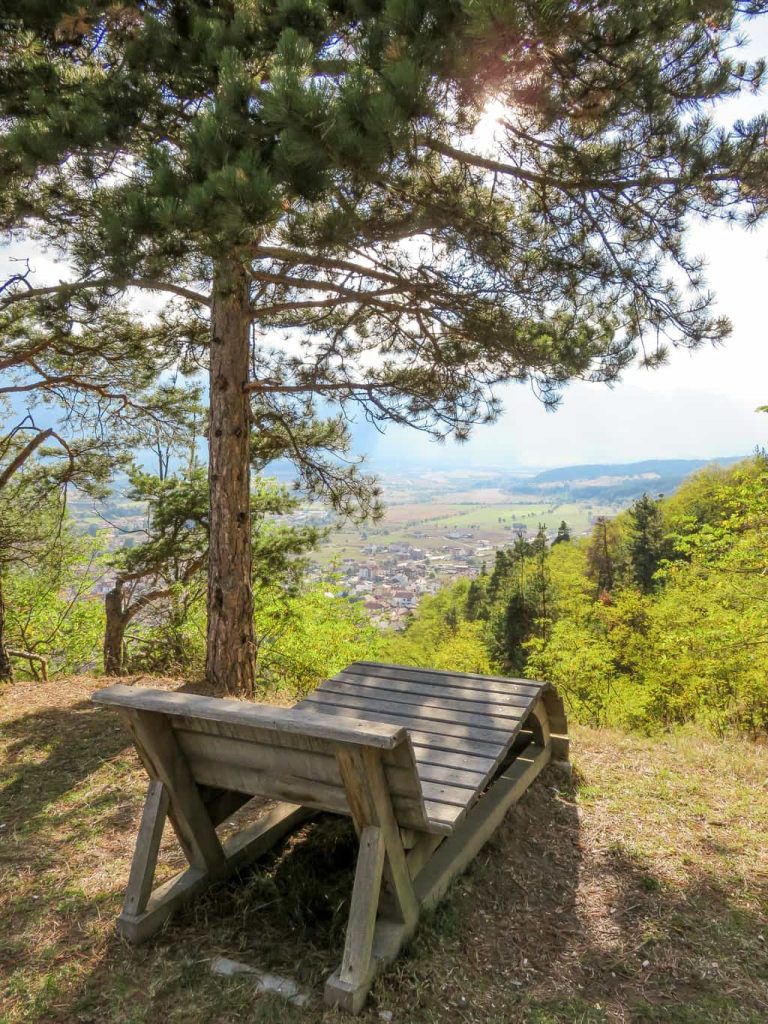
One of the things I enjoyed mostly during my second visit to Bansko, was the view from the Razlog Tower. From the viewing platform of the 12-m high tower, you can see 3 mountains at the same time and the two towns Razlog and Bansko! The view is simply mesmerizing! Rila, Pirin and the Rhodope are all around you!
How to get there:
Basically all buses that go to Bansko stop at Razlog, so just get to the bus station in Bansko and take a bus. The distance from Bansko to Razlog is only 6 km, so taking a taxi is a good option. This is also what we did.
Indulge in the local hot springs
Well, not many people might know this, but Bulgaria is a well-kept secret in the spa tourism. Hot mineral springs, spa resorts, swimming pools with hot mineral water are just a few of the things Bulgaria can offer. Just a few kilometers away from Bansko, at 6 km to be precise, is located the village of Banya, where you can find spa and wellness treatments or you can relax in one of the hot spring swimming pools there.

We visited the swimming pool at Villa Victoria, but there are also other outdoor swimming pools at the Hot Springs Medical & Spa Hotel, Seven Seasons Hotel, Seven Springs Hotel, just to name a few.

Immerse in contemporary art at the International Art Gallery
Bansko is not only about traditions, history and nature, as you might think. Unexpectedly enough you can find some amazing contemporary art exhibited in Bansko. The gallery shows both works of Bulgarian and international artists.
Practical info:
Address: Nikola Y. Vaptsarov Street 2
Opening hours: daily, 11 am – 5 pm
Admission: free; paitings are for sale though
Foods to try in Bansko
When visiting Bansko, you should definitely eat at a local mehana (‘механа‘). These are traditional style Bulgarian taverns that serve local dishes and have folklore bands playing. Most of them have lovely beer gardens, which is perfect for the summer months, or if it’s too hot, you can sit inside, in the cool rooms.

Here are some local foods you must try during your stay in Bansko:
Kapama (‘капама’) – although this a typical winter dish, you can still find it served in the summer. It’s also a traditional Christmas Eve dish. Assorted meats (chicken, pork, veal, rabbit, lard, black pudding, and sausage) are slowly cooked in a clay pot together with sauerkraut, red beets and rice.
Chomlek (‘чомлек‘) – is another slowly cooked stew in a clay pot. A veal (or pork) shank is braised with some onions, carrots, tomatoes, and spices in red wine. The dish is served with potatoes which have been added to dish at the end and let baked together.
Katino meze (‘Катино мезе’) – Katino Meze is an appetizer, which is small pieces of pork that are first fried with some leeks, paprika and onions, and then stewed in a clay pot with mushrooms and white wine. It’s served garnished with chopped flat parsley.

Banski starets (‘Бански старец‘) is dry-cured pork sausage (saucisson sec) seasoned with paprika, cumin, and ground black pepper, served as an appetizer. It’s a super delicious salami type, I must admit one of my favorite ones, and resembles a bit the Bulgarian lukanka.
Banska kreshchina (‘Банска крешчина’), pronounced [crash-CHIENA] is type of a prosciutto, served as an appetizer or for breakfast as cold cuts.
Where to stay in Bansko
You will be surprised by the variety of accommodations in Bansko: from luxurious, 5-star spa hotels, to holiday apartments, small family-owned hotels and cute little B&Bs. Depending on your budget and the length of your stay, the choice is overwhelming.
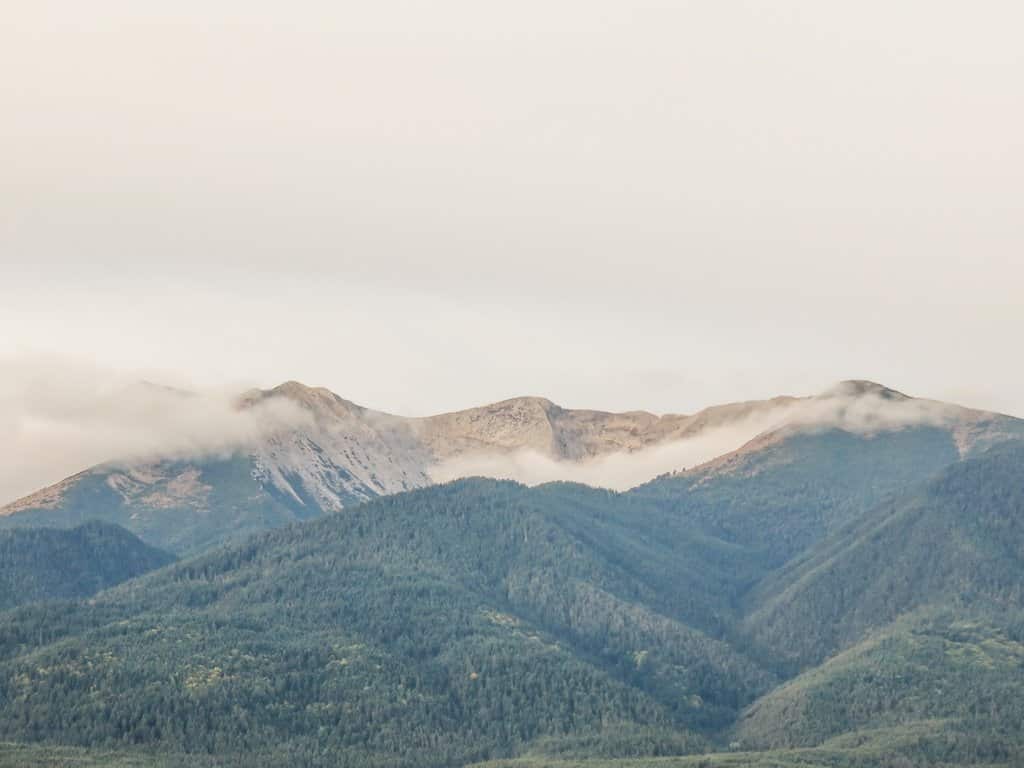
When I visited Bansko the second time I stayed at Pri Ani Guest House and I had the most amazing view of the mountains. The place was clean and comfortable and even within the tiniest budget.
If you want to splurge in some luxury than you should choose for the 5-star Kempinski Hotel Grand Arena Bansko or for the boutique hotels Ores, or Amira.

If you are planning to stay longer like spending a week or two, then one of the apartment hotels like Lucky Bansko Aparthotel SPA & Relax or the Premier Luxury Mountain Resort would be a good choice.
Or why not stay in one of the charming traditional houses in the style of the Bulgarian National Revival, like Matsurev Han, Banskovilla Zlateva House, or Zigen House.
