
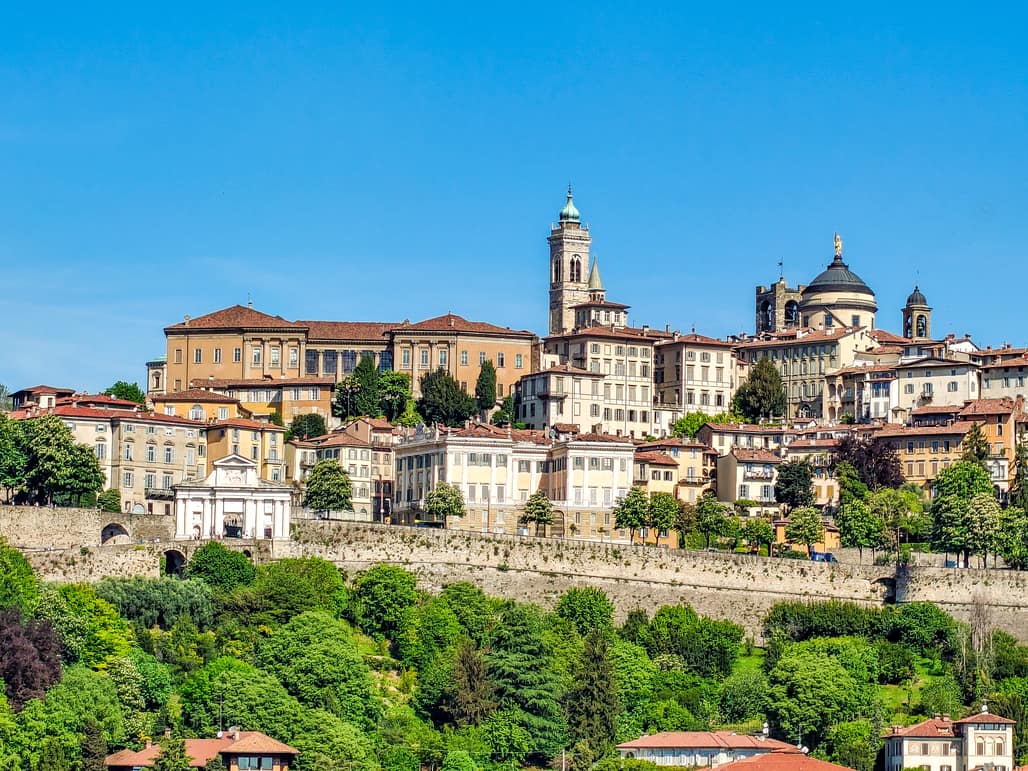
Every trip begins long before you arrive. Bergamo certainly did.
Long before I arrived, I was already designing the experience I wanted to have. I knew I wanted to wander through Città Alta, spend a day on Lake Iseo, visit as many art museums as possible and, of course, enjoy Italian food along the way. I had chosen to stay in Bergamo Bassa, mapped out the museums around their opening days and even designed my own day trip after deciding the organised tours weren’t what I was looking for.
Looking back, those decisions shaped the trip exactly as I’d hoped.
Then Bergamo started making its own suggestions.
A conversation in a small shop completely changed one day’s itinerary. A planning compromise led to one of my favourite walks. An evening at the theatre gave me a completely different perspective on the city. By the time I left, the trip had become even better than the one I had planned.
This is the Bergamo I discovered after four days of exploring the city.
DISCLOSURE: This post contains affiliate links. If you make a purchase via one of those links, I will earn a commission at no extra cost for you.
The decision that shaped four days in Bergamo
Before I booked my accommodation, I faced the same question almost everyone visiting Bergamo eventually asks: stay in Città Alta or Città Bassa?

At first glance, the answer seems obvious. Città Alta is the postcard version of Bergamo. Its medieval streets, historic buildings and UNESCO-listed Venetian Walls make it the part of the city most visitors dream of staying in.
I chose Città Bassa instead.
Looking back, it was the single best decision I made.
The reason had little to do with price or convenience. I wasn’t choosing where to sleep. I was choosing how I wanted to experience Bergamo over four days.
Città Bassa is flat, easy to reach by local bus from the airport and much kinder to your suitcase than dragging it uphill over cobbled streets. More importantly, it made every day easier. After hours of exploring museums, churches and steep medieval streets, I never had to end the day with another uphill walk back to my accommodation.
That may sound like a small thing.
After four days, it wasn’t.
Staying in Città Bassa also meant I experienced both sides of Bergamo every day. Every morning I looked forward to heading up to Città Alta. Every evening I enjoyed returning to a neighbourhood that felt more local and less touristy. Instead of choosing between the two parts of the city, I got to experience both.
Would I enjoy waking up inside the medieval city?
Absolutely.
Would I stay there next time?
No.
For the way I travel, Città Bassa gave the entire trip a better rhythm. It made arriving easier, evenings more relaxed and every visit to Città Alta feel like a destination rather than simply stepping outside my front door.
If I returned to Bergamo tomorrow, I wouldn’t spend a second reconsidering that decision.
Looking for more practical planning advice? My 9 Travel Decisions That Will Shape Your Bergamo Trip covers the choices that made the biggest difference to my experience and can help you plan your own visit with more confidence.

The Bergamo I hadn’t planned for
The best parts of my trip weren’t always the ones I’d planned months in advance.
Some happened because I made a conscious choice to do things differently. Others happened because Bergamo quietly nudged me in another direction.
Designing my own Lake Iseo day
The day trip to Lake Iseo is a good example.
Before leaving for Italy, I spent quite a bit of time looking at organised excursions. None of them offered the day I had in mind. Most departed from Milan, while I wanted to travel directly from Bergamo, spend time in Lovere, cross the lake by ferry and return through another lakeside town. So I built my own itinerary instead.
It didn’t go entirely to plan.
A public holiday changed the ferry schedule and the route I’d carefully put together suddenly wasn’t possible. Looking back, I could have avoided that by checking the holiday calendar more carefully.
But that isn’t really the point.

The point is that designing the day myself gave me the freedom to adapt instead of following someone else’s schedule. If I returned tomorrow, I’d still skip the organised tours and build my own itinerary. I’d simply make sure to check the public holidays first.
A shopkeeper’s recommendation: San Vigilio
Another unexpected recommendation came from a conversation in a small local shop.
The owner asked whether I’d already taken the second funicular to San Vigilio. I hadn’t. In fact, I didn’t even know there was a second funicular beyond Città Alta.
The recommendation came too late to fit into that day’s plans, so I reshaped the following day’s itinerary around it instead.
I’m glad I did.

San Vigilio offered some of my favourite views of Bergamo and a completely different perspective on the city. If you’re visiting Bergamo for the first time, don’t stop at Città Alta. Continue to San Vigilio as well. It’s only one more funicular ride, but it’s an experience that’s surprisingly easy to miss if no one points you in that direction.
The walk I never meant to take
Not every surprise came from another person.
After visiting the Accademia Carrara, going straight into GAMeC (Modern and Contemporary Art Gallery of Bergamo) would have been the logical thing to do. The two museums are directly opposite each other. But that day was already full, so I left the modern art museum for later, as something to fit in if I still had time before leaving Bergamo.
In the end, I did.
From a planning perspective, returning to the same area wasn’t particularly efficient.
From a travel perspective, it turned out to be one of the best things that happened.

Walking back through the area on a different day led me to a peaceful stretch along the canal that I would never have discovered if I’d simply crossed the road from one museum to the other. Sometimes the less efficient route ends up being the more memorable one.
Seeing the Donizetti Theatre from the inside
Something similar happened one evening at the theatre.
I had booked tickets for a concert, but what stayed with me just as much was the theatre itself. Experiencing the theatre during a live performance, rather than simply admiring it from the outside, gave me a completely different appreciation of Bergamo’s cultural life.

If there’s a performance during your visit, it’s well worth checking whether you can experience the theatre from the inside.
Making time for aperitivo
Aperitivo became one of my favourite daily rituals in Bergamo.
It is not just a pre-dinner drink. The food that comes with it is part of the experience too: small bites, generous platters, and the slow shift from sightseeing mode into evening mode. Around aperitivo time, bars started filling with locals meeting after work, and the atmosphere changed almost without effort.

If you’re visiting Bergamo, don’t treat aperitivo as something to squeeze in before dinner. Make time for it. Find a terrace or a lively square, order a drink and enjoy everything that comes with it. It’s one of the easiest ways to experience the city’s rhythm beyond its museums and monuments.
None of these were hidden gems. They were simply experiences that never appeared in my original planning.
They became some of the strongest recommendations I’d pass on to someone visiting Bergamo for the first time.
A few things to keep in mind before visiting Bergamo
Check public holidays before planning day trips
If you’re planning to explore Lake Iseo or travel beyond Bergamo, check whether your visit coincides with an Italian public holiday. Local buses and ferries often operate different weekday, weekend and holiday timetables. I had planned to combine Lovere with a ferry crossing and another lakeside town, but a public holiday meant the route I’d carefully designed was no longer possible. The day still turned out to be one of the highlights of the trip, but it’s five minutes of planning that can save an entire day of replanning.
Walk a different way back
Whenever possible, I try not to retrace my steps. It doesn’t always work in Bergamo, but choosing a different street often led to another church, another square or a view I hadn’t expected. One of my favourite walks of the trip only happened because I didn’t take the most direct route.
Don’t feel you have to research every restaurant
One thing I never do before travelling is make a list of restaurants. Instead, I wander until a place catches my eye. Sometimes I’ll check the menu, but it’s usually the atmosphere that makes the decision. Bergamo rewards that approach. Sitting down for an unplanned meal or lingering over an aperitivo became just as much a part of discovering the city as visiting its museums and viewpoints.
If I went back to Bergamo tomorrow…
I’d stay in Città Bassa again without giving it a second thought.
I’d still build my own day around Lake Iseo rather than book an organised tour. This time, though, I’d make sure the ferry crossing finally happened.
I’d take the second funicular up to San Vigilio again without hesitation. Not because I know what the view looks like now, but because it’s one of those places that changes with the weather, the light and the season.
I’d look for another performance at the Donizetti Theatre. Experiencing the building while it was full of people enjoying an evening out became one of my strongest memories of Bergamo, and I suspect it would every time I returned.
I’d never skip aperitivo. Not because of the drink, or even the generous plates of food that come with it, but because for an hour or so the city seems to slow down. Looking back, those moments captured the atmosphere of Bergamo just as well as any museum or viewpoint.

Most of all, though, I’d leave room for the unexpected.
I’d still ask locals for recommendations. I’d still take a different street just to see where it led.
After all, one conversation in a small shop changed an entire day.
Some of the best parts of the trip were never part of the plan.
That’s the Bergamo I’d go back for.
